
Whispers of the Past: A Day in Sibiu, Romania
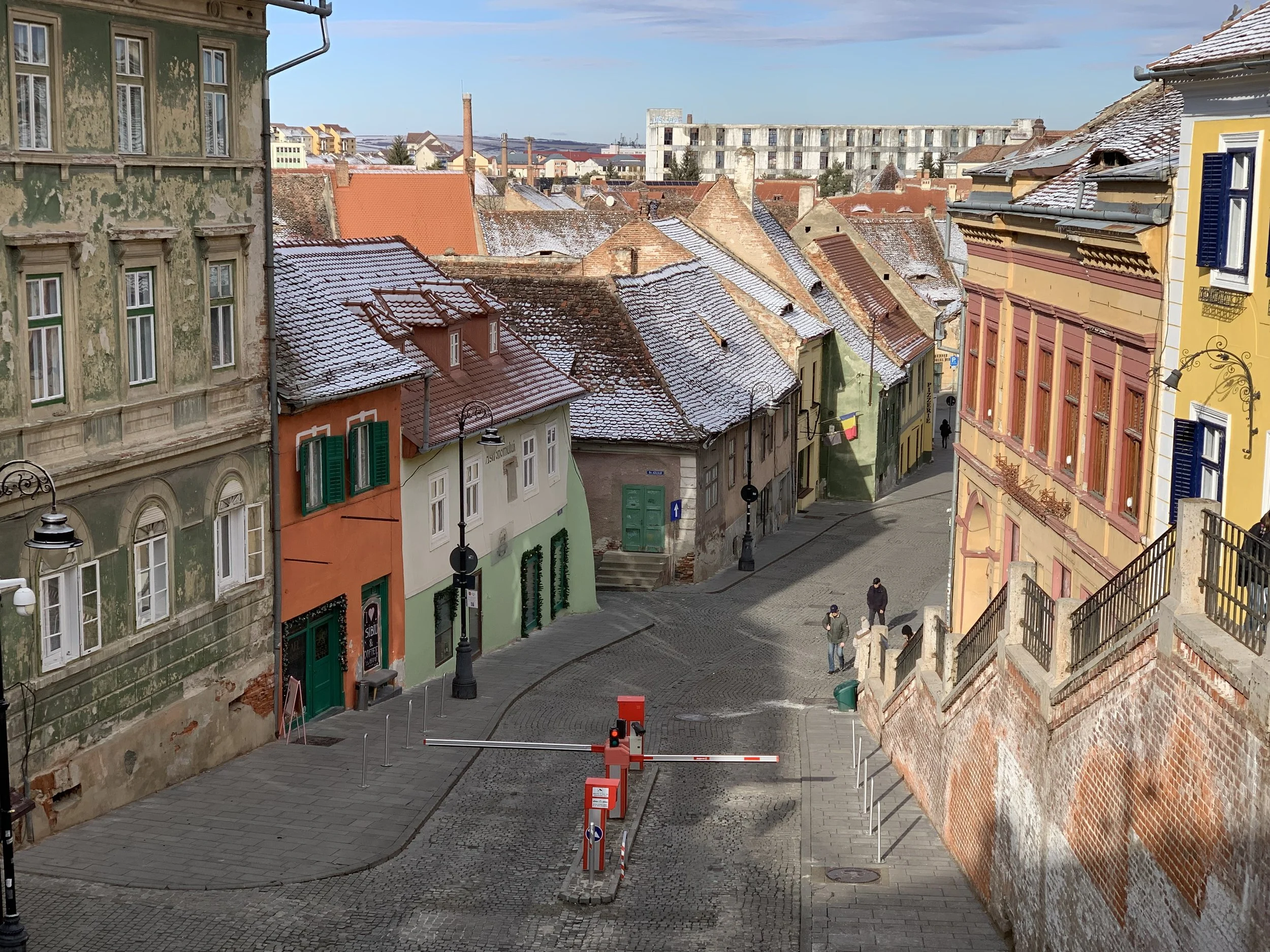
There’s a place tucked into the heart of Transylvania where every corner feels alive with stories — some whispered through ancient alleyways, others carried on the crisp mountain air. It’s a city where terracotta rooftops wear a dusting of snow in winter, where houses appear to watch you with slitted eyes, and where legends linger over cast-iron bridges.
Welcome to Sibiu, one of Romania’s best-kept secrets — a place where time slows down just enough for you to catch your breath, and maybe, just maybe, believe in a little bit of magic again.
Lovers’ Bridge: Where Legends and Promises Meet
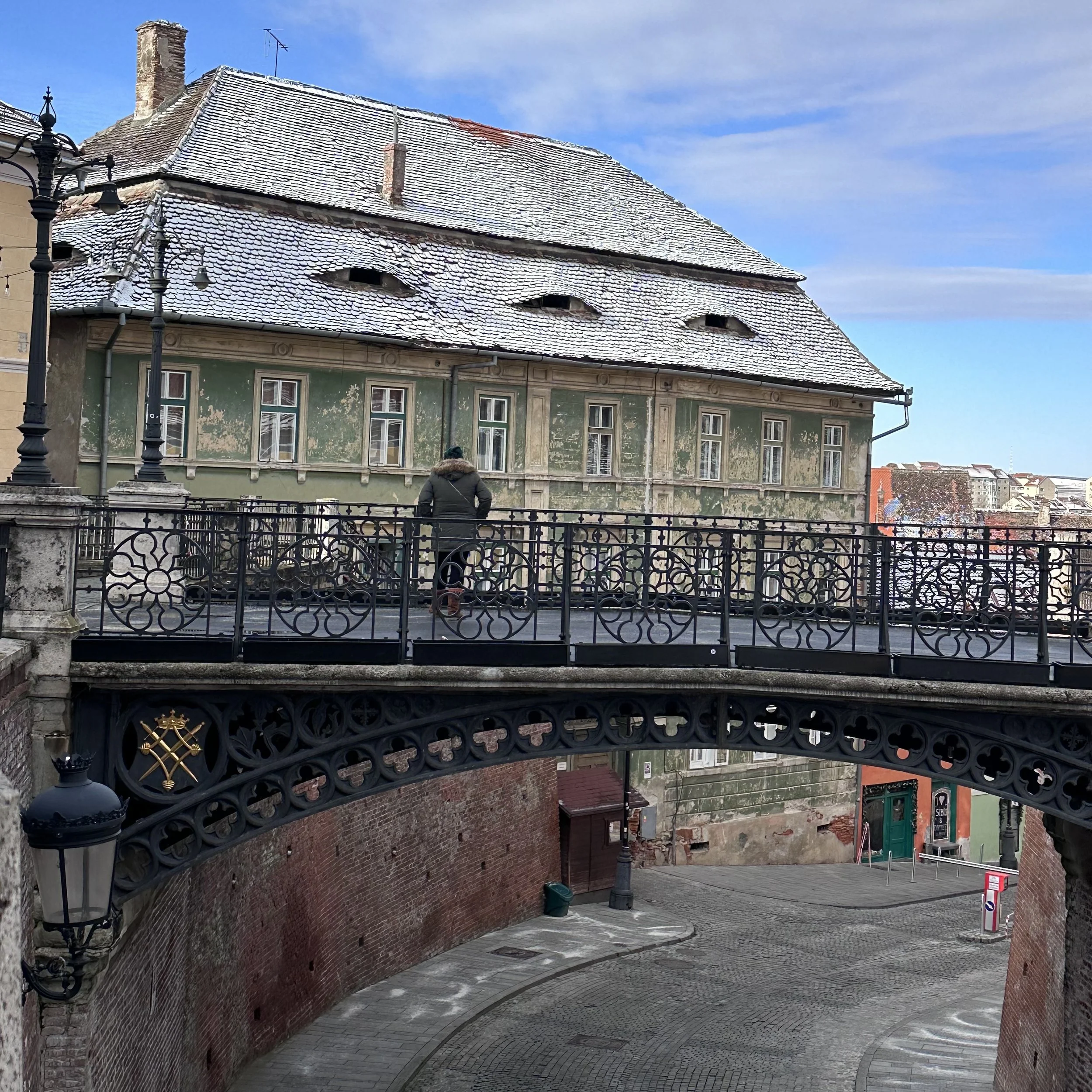
No visit to Sibiu is complete without stepping onto Lovers’ Bridge (Podul Minciunilor), a graceful, cast-iron arch that seems delicate enough to belong in a fairytale. Built in 1859, it was the first wrought-iron bridge in Romania — a technical marvel for its time, and still standing proudly today.
But what truly makes this bridge special is the legend.
They say the bridge can “hear” lies. That if someone speaks an untruth while standing on it — particularly a promise of love they don’t intend to keep — the bridge will groan, shake, or even collapse. Over the decades, the story has grown, weaving itself into the city’s identity.
Maybe it’s the way the bridge connects two of Sibiu’s oldest squares, or maybe it’s just the power of a good story, but standing there, you can’t help but lower your voice, as if the bridge itself is listening.
Whether you believe the legend or not, Lovers’ Bridge is a beautiful, symbolic spot — a reminder that words and promises matter. A place where travelers, lovers, and old friends stop to savor a moment or snap a photo under its wrought-iron curves.
And if you happen to be traveling solo or with friends (like I was), it still feels just as romantic — a reminder to make promises to yourself too.
The Charm of Sibiu’s Old Town
From the bridge, it’s an easy wander into Sibiu’s historic center — one of the most beautifully preserved medieval towns in Europe.
The streets here are a patchwork of cobblestones, lined with houses that lean and whisper to one another. Their facades are painted in soft hues of butter yellow, dusty rose, and robin’s-egg blue, their windows topped with half-shut “eyelid” dormers that seem to watch you pass. (Locals affectionately call them the “eyes of Sibiu.”)
There’s a comfortable lived-in elegance to Sibiu. It feels neither too polished nor too crumbling. Instead, it’s a place where history hums gently under the surface — present but never pushy.
The town is centered around three beautiful squares:
Piata Mare (the Big Square) — wide, open, and lined with museums and cafés.
Piata Mica (the Small Square) — more intimate, with arcaded houses and charming little shops.
Huet Square — the oldest, anchored by the towering Gothic beauty of the Evangelical Cathedral.
Each square flows effortlessly into the next, making it easy to lose track of time as you wander, sip coffee at an outdoor table, or browse local handicrafts tucked into arched doorways.
Climbing the Clock Tower
If you’re craving a different perspective on Sibiu, look no further than the Council Tower (Turnul Sfatului).
This slender medieval tower stands between Piata Mare and Piata Mica, its narrow spiral staircase leading up to one of the best views in the city. The climb is a bit steep — stone steps worn smooth by centuries of feet morph into wooden stair cases as you climb higher— but it’s worth every bit of effort.
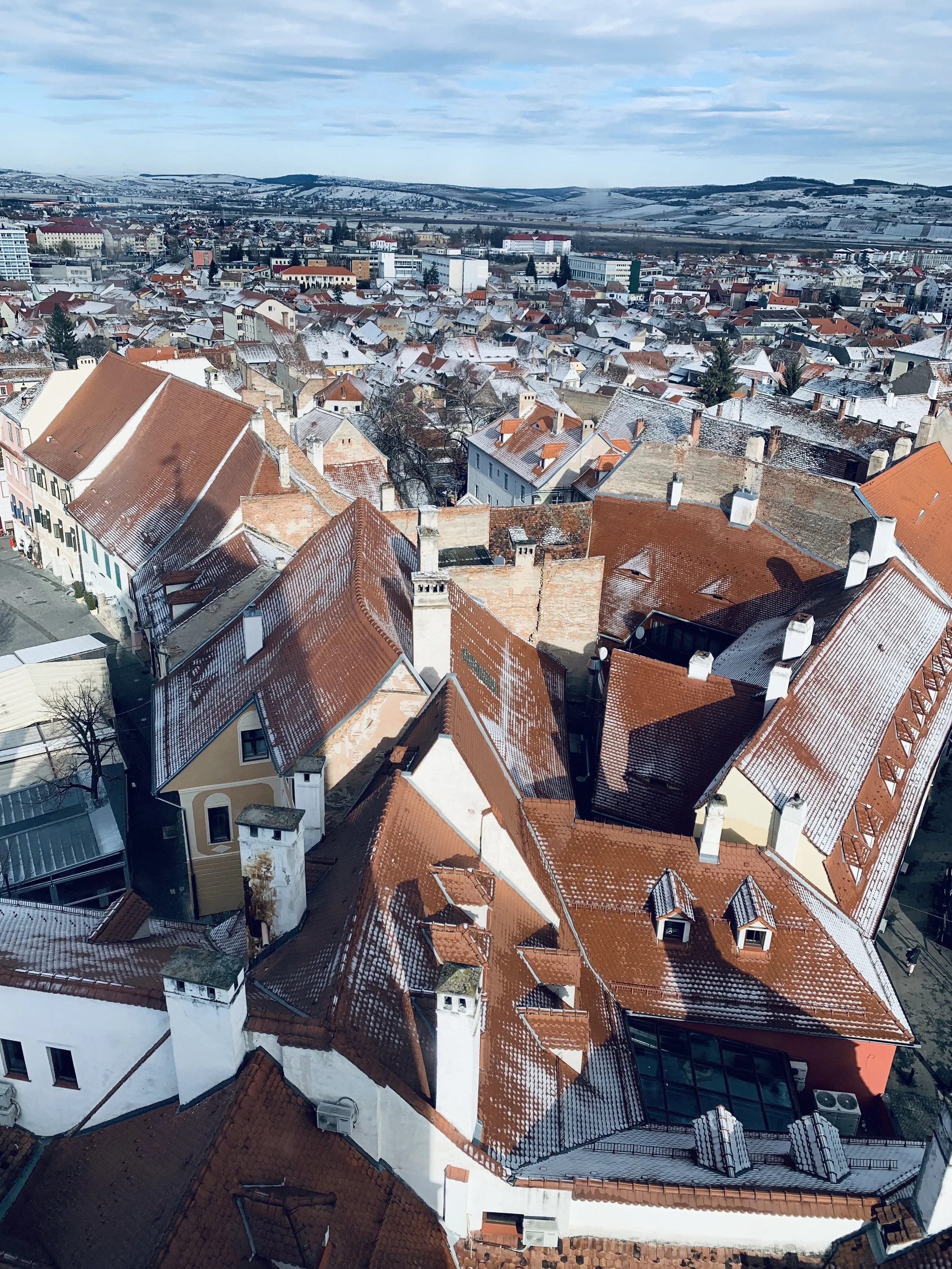
From the top, Sibiu unfolds like a storybook at your feet. Terracotta tiled rooftops stretch into the distance, punctuated by steeples and towers. The snowy peaks of the Făgăraș Mountains loom beyond, majestic and slightly surreal. And the “eyes” of the houses watch you from every angle, giving the whole scene a playful, almost otherworldly feeling.
Up there, you can feel the heartbeat of the city — the old rhythms of market days, festivals, and ordinary lives that have passed through these streets for centuries.
It’s quiet, too. No rush. No crowds pushing for photos. Just you, the sky, and Sibiu laid out below like a secret whispered just for you.
Wandering Where Old Town Meets New
After descending from the tower, I recommend following your curiosity — and your feet — toward the edges of the old town, where history begins to mingle with modern life.
Walk down narrow staircases that lead beneath ancient arches, wander through shadowed corridors known as “passages,” and eventually, you’ll find yourself drawn downhill toward the river.
Here, the charm shifts slightly. The old towns cobblestones give way to broader streets. Art galleries and independent shops mix with cozy bakeries and local boutiques, while locals gather at cafés, sipping strong coffee and speaking rapid Romanian under strings of fairy lights.
The Cibin River curls along the newer neighborhoods, a gentle line between the medieval city and the life that’s grown around it. Markets bloom here during warmer months, bursting with produce, flowers, and handmade goods.
It’s a reminder that while Sibiu cherishes its past, it’s very much alive — a city that wears its history lightly but lovingly, without getting stuck in it.
Why Sibiu Feels Different
There’s a particular feeling that Sibiu leaves with you — a quiet kind of magic that doesn’t scream for your attention but instead wraps around you gently, like a warm coat on a cold day.
Maybe it’s the way the town embraces beauty without fuss.
Maybe it’s the sense of safety that lets you walk its streets at twilight without a second thought.
Maybe it’s the stories — the whispered lies on Lovers’ Bridge, the watchful eyes on the rooftops, the unseen lives that still linger in the stones.
Or maybe it’s simply that Sibiu gives you space — to wander, to wonder, to fall a little bit in love with travel all over again.
For mid-life women travelers like me — women who’ve seen enough of the world to crave meaning over must-sees — Sibiu is a gift.
It’s not about rushing. It’s about savoring.
It’s not about checking boxes. It’s about collecting moments.
It’s not about flashy luxury. It’s about quiet joy.
And isn’t that the best kind of travel?
⸻
Practical Tips for Visiting Sibiu
Getting There:
Sibiu has its own small airport (with connections to major European cities) or you can easily reach it by train or bus from Bucharest, Brașov, or Cluj-Napoca.
Best Time to Visit:
Spring and fall for pleasant weather and fewer tourists.
Winter for a true storybook scene (especially if it snows!) — plus a charming Christmas market.
Summer for lively festivals like the Sibiu International Theatre Festival.
Where to Stay:
Choose a guesthouse in the old town if you can. There’s something magical about stepping straight out your door into the history-soaked streets.
What to Wear:
Comfortable walking shoes — the cobblestones are beautiful but unforgiving.
Layers — mountain weather can shift quickly.
⸻
Final Thoughts: A Bridge, a Promise, and a Journey
When I think back on Sibiu, it’s not just the beautiful streets or the colorful rooftops that stay with me.
It’s standing on Lovers’ Bridge, the iron cool under my palms, thinking about promises — the ones we make to others, yes, but also the ones we make to ourselves.
To be honest.
To be kind.
To keep searching for places that spark wonder.
To travel not just to see the world, but to feel it.
Sibiu, with its legends, its watchful eyes, and its soft, winding streets, is one of those rare places that invites you to do just that.
And I hope, someday, you’ll find yourself standing there too — maybe making a quiet promise of your own.

Ensure that you stay connected while travelling with Simify’s eSims - Find out more now
This page contains affiliate links, meaning we may earn a commission at no extra cost to you - thank you for supporting our work!
