
A Rainy-Day Detour: Discovering the Magic of Organ Pipes National Park
The rain had well and truly set in by the time I decided to head for home. It wasn’t even midday, but the jobs I’d needed to finish were already done, and heading home early-ish suddenly felt like a small luxury. As the wipers rhythmically cleared the rain from the windscreen and the familiar stretch of the Calder Freeway rolled on ahead, a thought flickered through my mind — what about the Organ Pipes National Park?
So many times I’d driven straight past that brown sign, past the quiet entrance gate tucked beside the highway, never once pulling in. I was always too focused on getting somewhere — Melbourne-bound, usually in a rush, or returning late at night. But each time I passed, I’d wonder what lay beyond.
The name itself had always intrigued me. Back in 2006, I’d visited the Giant’s Causeway in Northern Ireland — those otherworldly hexagonal stones stepping out into the wild Atlantic. Behind them, the same basalt cliffs carried that same nickname: the organ pipes. I’d often wondered how these two geological siblings — separated by oceans and continents — might compare.
Today, with the rain easing and the air fresh and earthy, I decided to finally find out.
I clicked on my indicator and waited for a break in the inbound traffic before crossing the Calder and rolling through the gate. “I’ll just see what the signs say,” I told myself, smiling. I already knew everything I might need was stashed in the car — hiking poles, backpack, rain jacket, beanie, water.
And there it was. A modest sign near the carpark: Organ Pipes – 700m.
Perfect. The rain had lightened, the air was cool, and the loop trail promised a few other sights — about 90 minutes all up. Just enough for a quiet wander in nature.
A Walk Refreshed by Rain
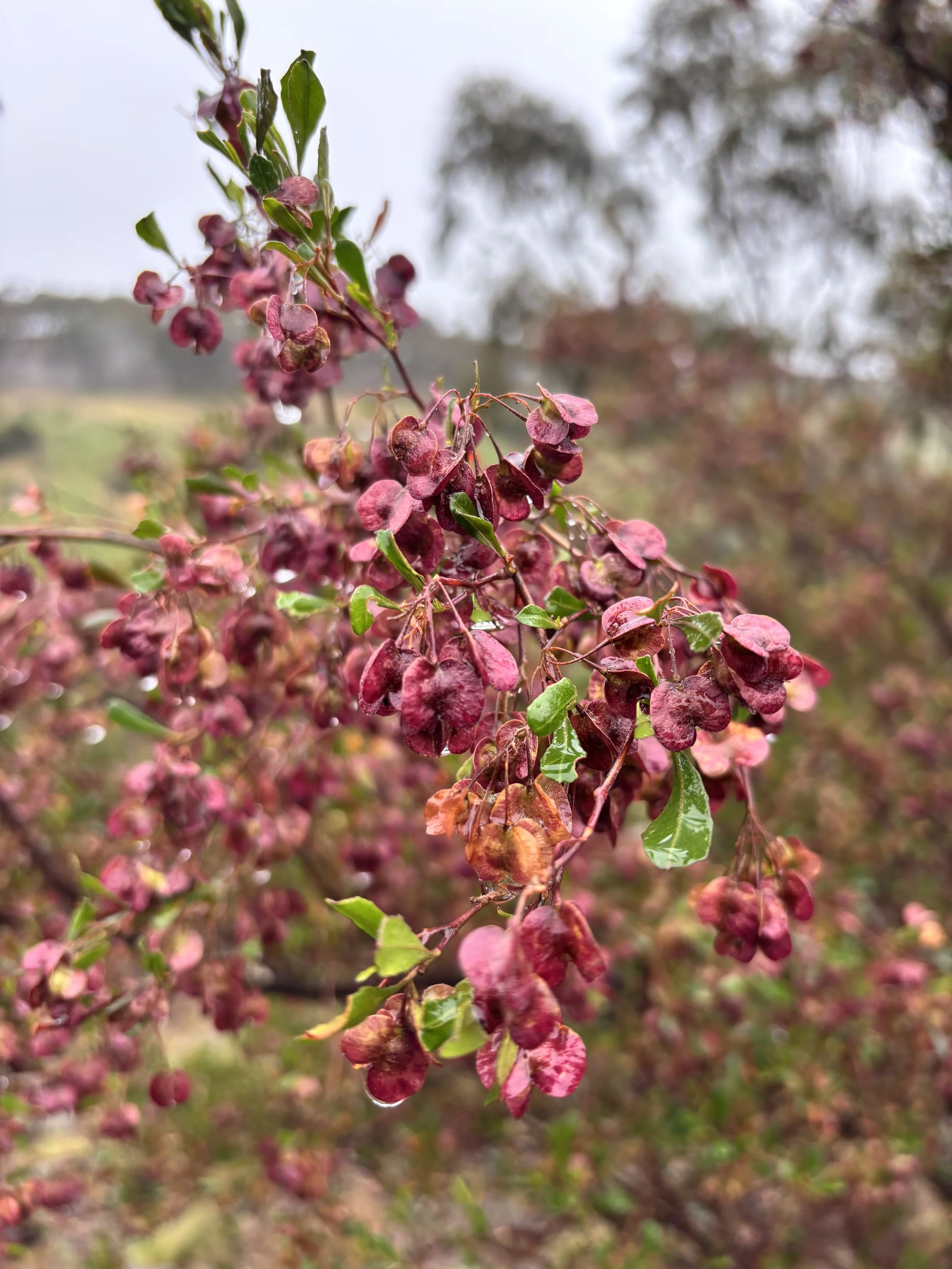
The path began as a paved maintenance track, curving down into the valley. I was grateful for the solid footing but mindful of the slick patches of moss glistening in the damp. The rain had freshened everything — the grass glowed a deeper green, leaves shimmered darker and heavier with moisture, and seed pods along the trees seemed to burst with colour.
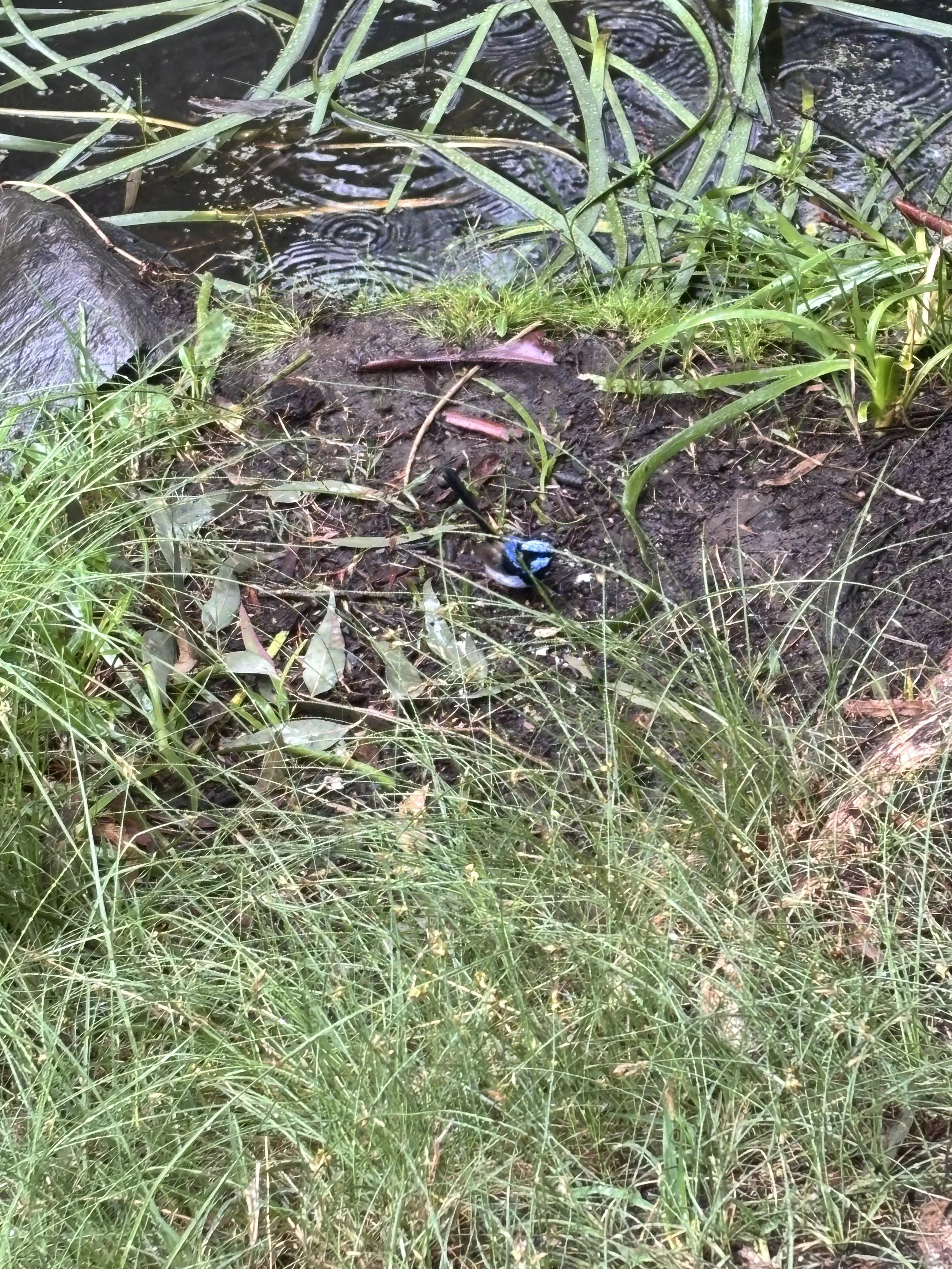
Blue wrens flitted along the edge of the trail — tiny flashes of sapphire in a world washed clean. Too far for a perfect photo, but close enough to lift my spirits. The males’ striking plumage stood out even more vividly against the grey sky, while the females’ soft brown tones blended beautifully into the bush.
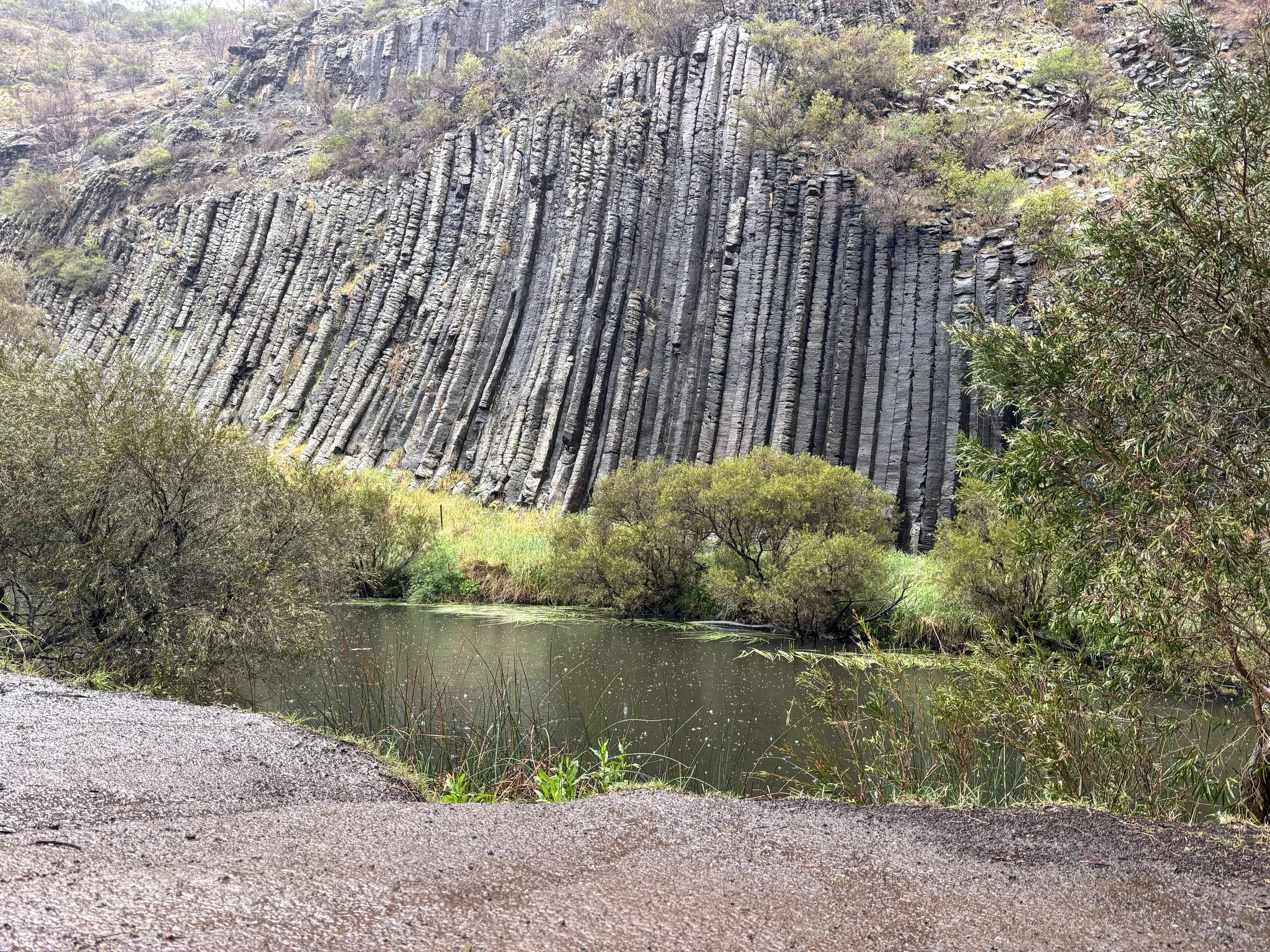
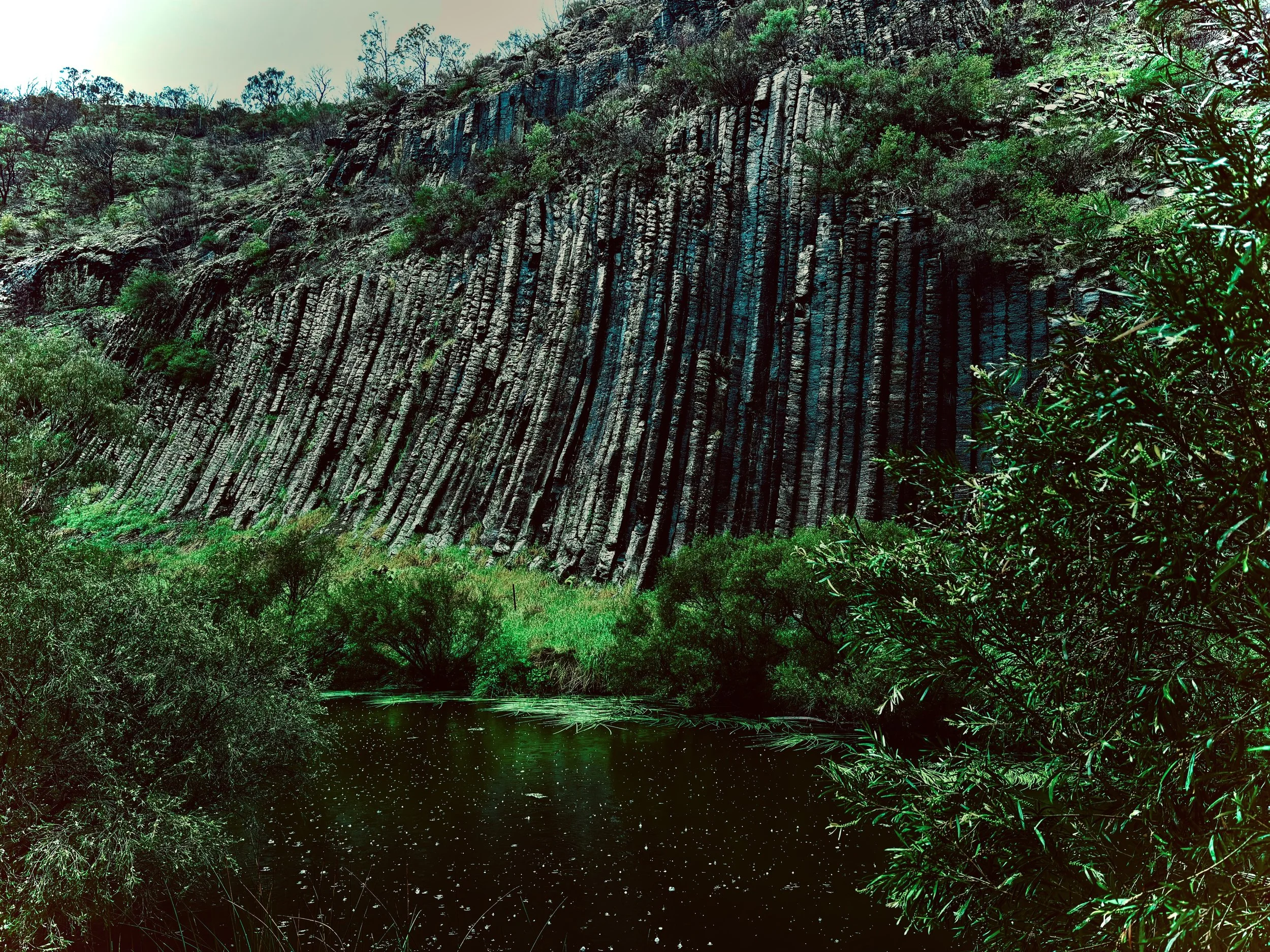
By the time I reached the lower picnic area, the famous Organ Pipes came into view — magnificent basalt columns rising sharply above Jacksons Creek, their tall hexagonal faces streaked with darkened rain patches. Water pooled and bubbled below, carrying the sound of the morning rain away downstream.
I edged closer to the water to take a photo, when another male blue wren landed nearby, completely unbothered by my presence. He hopped between rocks and roots, foraging for insects, his tiny feathers a flash of joy against the earthy tones of the creek bank.
Standing there, surrounded by quiet rain, rippling water, and ancient stone, there was an unexpected sense of calm — as if time itself slowed to match the rhythm of the river.
Along the Creek
Following the path beside the creek, I kept my eyes peeled for platypus — locals say they’ve been spotted here — and admired the way the tree roots twisted and clung to the riverbank. Each bend revealed new textures and patterns, roots exposed and gnarled from years of flood and flow.
As I began to climb gently back up the track, movement caught my eye — a lone wallaby, calmly grazing on the fresh grass. He watched me briefly, entirely at ease, then continued his morning snack as I quietly snapped a photo. Moments like that — unscripted and unplanned — are why I love slow travel.
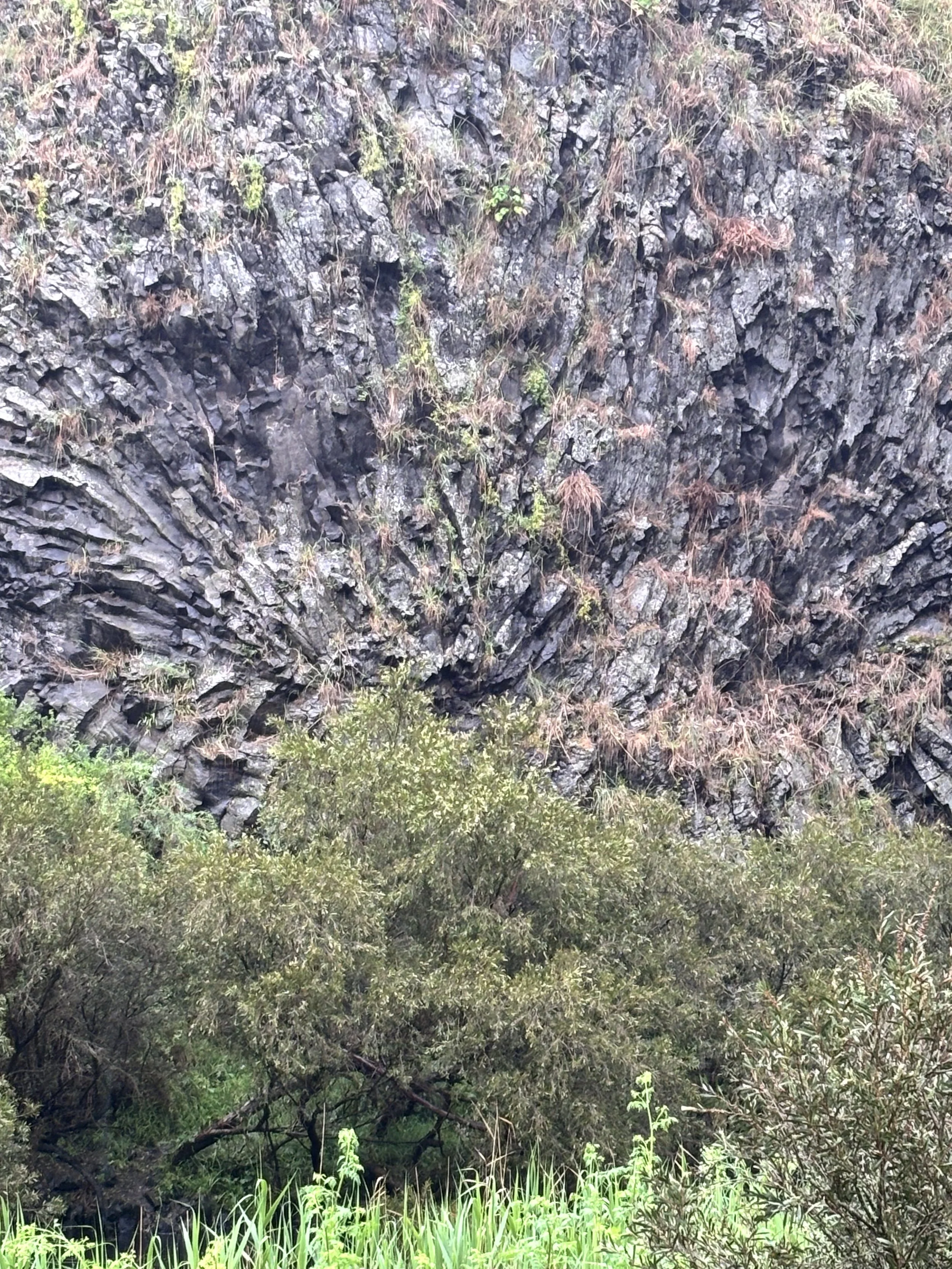
Further along, signs pointed towards the Rosette Rock. I was instantly intrigued. The name conjured images of petals spiralling outwards, stone blooming into form.
When I reached it, the Rosette took my breath away. The rocks fanned outward from a central point, a geological bloom frozen in time. I couldn’t tell whether it formed from the inside out or outside in, but the symmetry was hypnotic. If you looked long enough, it felt almost like staring into a time warp — nature’s own kaleidoscope carved from volcanic history.
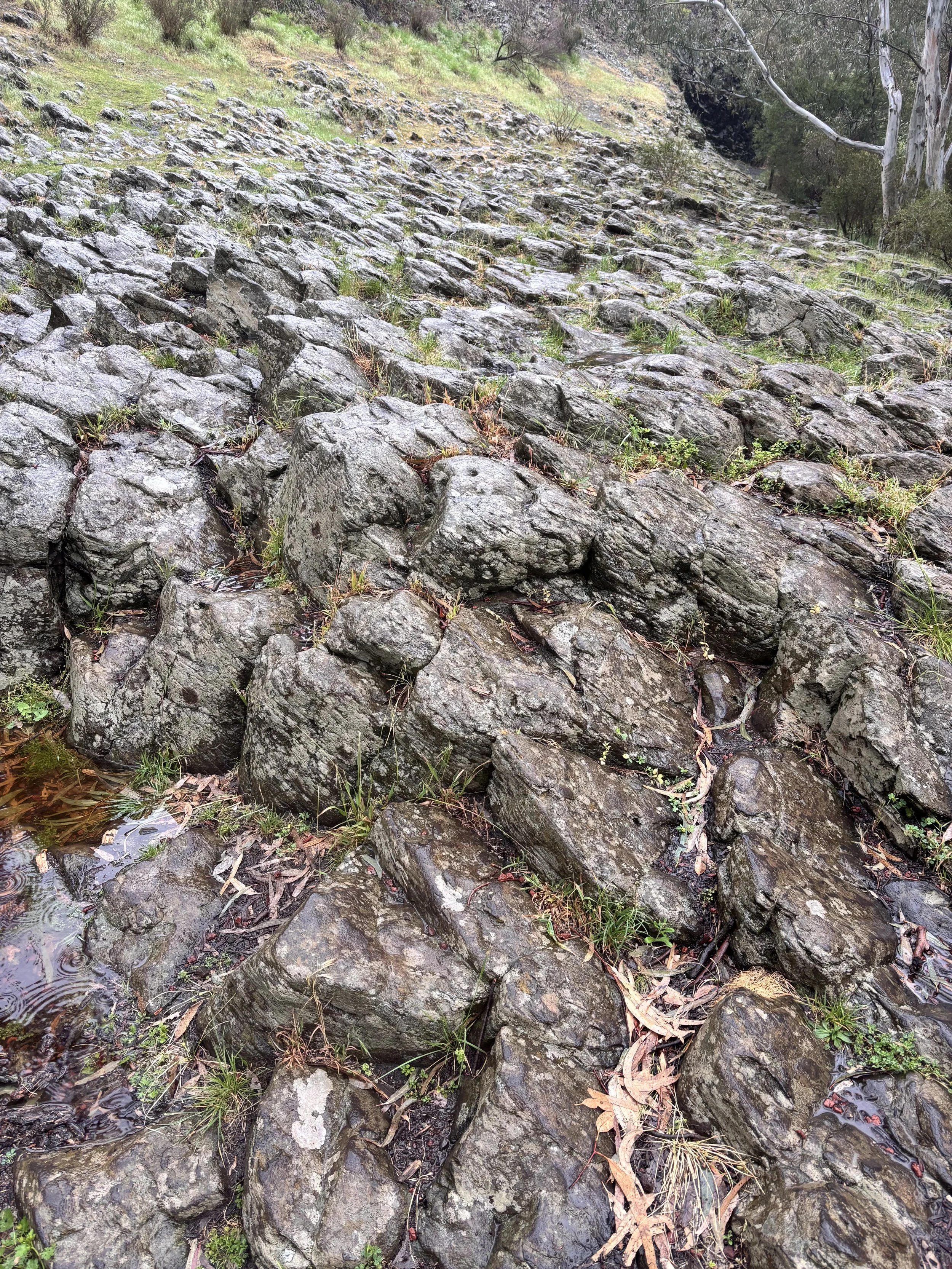
A little further again came the Tessellated Pavement, where the basalt formations once more took on their hexagonal shape. It reminded me instantly of the Giant’s Causeway — stones fitted together like puzzle pieces leading down to the water’s edge. I imagined that during higher river flows, more of these geometric stones would disappear beneath the surface, much like those submerged in the wild North Atlantic.
Back to the Beginning
The path eventually curved uphill, leading me back toward the carpark. My rain jacket clung damply to my shoulders, and the toes of my trail runners were splattered with mud. Yet I couldn’t stop smiling.
In just over 100 minutes, I’d explored something I’d driven past countless times. It wasn’t a 20-kilometre day on the Cotswold Way — just 1.7 kilometres of gentle walking, fresh air, and curiosity. But that’s all it took.
Sometimes the greatest adventures aren’t found in faraway places — they’re waiting quietly beside the roads we take every day, just asking us to pause and look closer.
Today, I finally took the time to explore mine.
Visiting Organ Pipes National Park
Where It Is:
Organ Pipes National Park is located in Keilor North, Victoria, around 20 kilometres northwest of Melbourne’s CBD and just off the Calder Freeway (M79). The entrance is well signposted and accessible from both inbound and outbound lanes.
Getting There:
From Melbourne, it’s about a 25-minute drive along the Calder Freeway. For those using public transport, take the train to Sunbury or Watergardens Station, then connect via taxi or rideshare (around 10–15 minutes from either stop).
What You’ll Find:
This compact park — just 121 hectares — protects one of Victoria’s most striking examples of volcanic basalt formations, created over a million years ago by lava flows from nearby volcanic plains. As the lava cooled and cracked, it formed the geometric columns now known as the Organ Pipes.
Things to Do:
Walks:
Organ Pipes Track (700m one way) — a short but steep walk to the main formation.
Rosette Rock and Tessellated Pavement Loop (1.7km return) — perfect for a gentle 90-minute stroll.
Wildlife Watching: Keep an eye out for wallabies, echidnas, blue wrens, rosellas, and even platypus in Jacksons Creek.
Picnicking: There are shaded picnic areas with tables near the carpark and at the base of the trail.
Photography: The basalt columns are best photographed in the early morning or after rain when the stone darkens to rich tones.
Facilities:
Free entry and parking
Toilets near the carpark
Picnic shelters and tables
No café or water facilities — bring your own supplies
Best Time to Visit:
Year-round, though spring and autumn bring the most comfortable walking weather. The park is particularly beautiful after rain when the creek flows stronger and the vegetation feels alive with colour.
Slow Travel Reflection
Pipes National Park is one of those places that reminds you adventure doesn’t always require a passport or a packed itinerary. It’s about curiosity — taking the time to pull over, stretch your legs, and see what’s waiting just beyond the roadside.
For women who crave connection — to nature, to place, to self — this little park offers a gentle reminder that exploration begins the moment you decide to stop rushing past.

Ensure that you stay connected while travelling with Simify’s eSims - Find out more now
This page contains affiliate links, meaning we may earn a commission at no extra cost to you - thank you for supporting our work!
