
Abu Dhabi: Marble, Domes and Desert Dreams
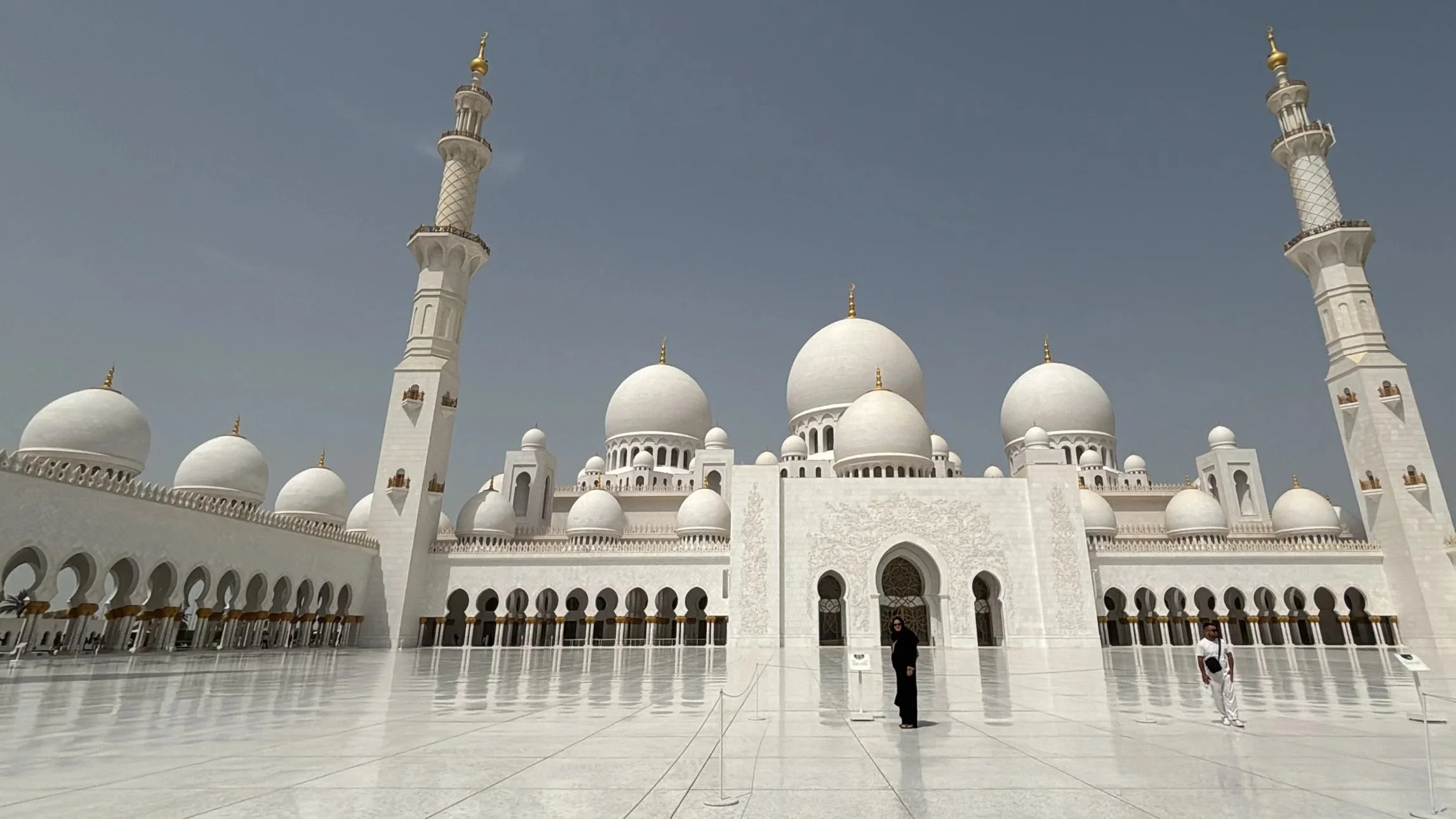
Sheikh Zayed Grand Mosque, Abu Dhabi
The morning began with a flurry of phone calls, WhatsApp messages and a growing sense of uncertainty. Somewhere in the maze of Dubai’s downtown chaos and residential towers our driver was struggling to find us. While multiple cars came and went, eventually our driver appeared outside our accommodation, nestled in the shadow of the iconic Burj Khalifa.
Dubai was already awake. Workers hurried along the footpaths, taxis darted through traffic and the city's glittering towers reflected the soft morning sun. With introductions exchanged, we climbed aboard and set off for Abu Dhabi.
Our tour group was refreshingly small. Just the two of us and another couple. There would be no crowded buses or competing voices over a microphone. Instead, the atmosphere felt relaxed and personal, allowing us to settle into the journey ahead.
Leaving Dubai behind was almost as fascinating as arriving. Tower after tower gradually gave way to lower buildings. The sprawling suburbs stretched outwards before eventually surrendering to the desert. The transition felt surprisingly quick. One moment we were surrounded by some of the world's most ambitious architecture; the next, endless dunes rolled away towards the horizon.
The desert possesses a quiet beauty that photographs rarely capture. Waves of golden sand shift with the wind, their shapes constantly changing. The landscape appeared empty at first glance, yet the longer we looked, the more details emerged. Isolated shrubs clung stubbornly to life. Power lines traced thin paths through the wilderness and over stimulated road houses bore the fantasy of other worlds often only seen in movie - the Mad Max roadhouse in particular stood out, mainly due to it’s connection to home.
The highway itself seemed to slice through an infinite sea of sand.
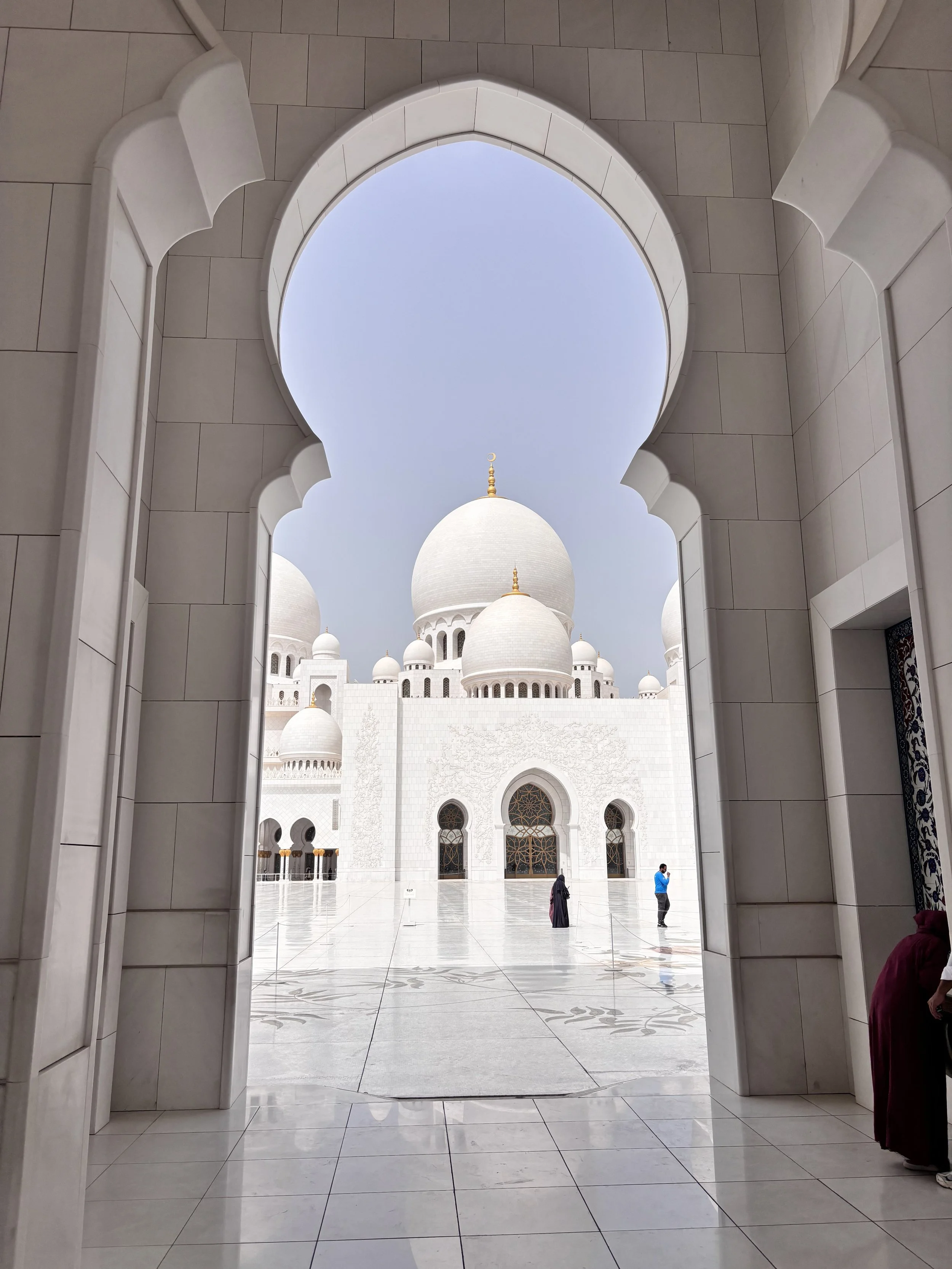
Sheikh Zayed Grand Mosque, Abu Dhabi
As the kilometers passed beneath us, conversation ebbed and flowed. Sometimes we chatted with our fellow travelers. Other times we simply gazed out the window, watching the desert unfold. I always seem to find was something calming about the simplicity of the landscape after the sensory overload of Dubai. I’m pretty sure it’s a reflection of my farm upbringing.
Abu Dhabi may only be around ninety minutes from Dubai, but it feels distinctly different.
Where Dubai dazzles with spectacle and ambition, Abu Dhabi carries itself with a quieter confidence. As the capital of the United Arab Emirates, it feels more measured, more spacious and perhaps a little more traditional. Wide boulevards lined with manicured gardens replaced the desert scenery, while elegant buildings hinted at the wealth generated by the region's vast oil reserves.
It is easy to view Abu Dhabi as simply a day trip from Dubai, another destination to tick off an itinerary. Yet the journey itself reveals an important part of the Emirates' story. The road connecting the two cities is a reminder of how rapidly this nation has transformed. Within a single lifetime, communities that once relied on pearl diving, fishing and trade have evolved into modern global cities that rank among the world's most remarkable urban achievements.
Travelling between Dubai and Abu Dhabi offers more than just a change of scenery. It provides a glimpse into the contrasts that define the UAE itself: tradition and innovation, desert and city, quiet reflection and dazzling ambition.
And as Abu Dhabi's skyline came into view, we knew the day was only just beginning.
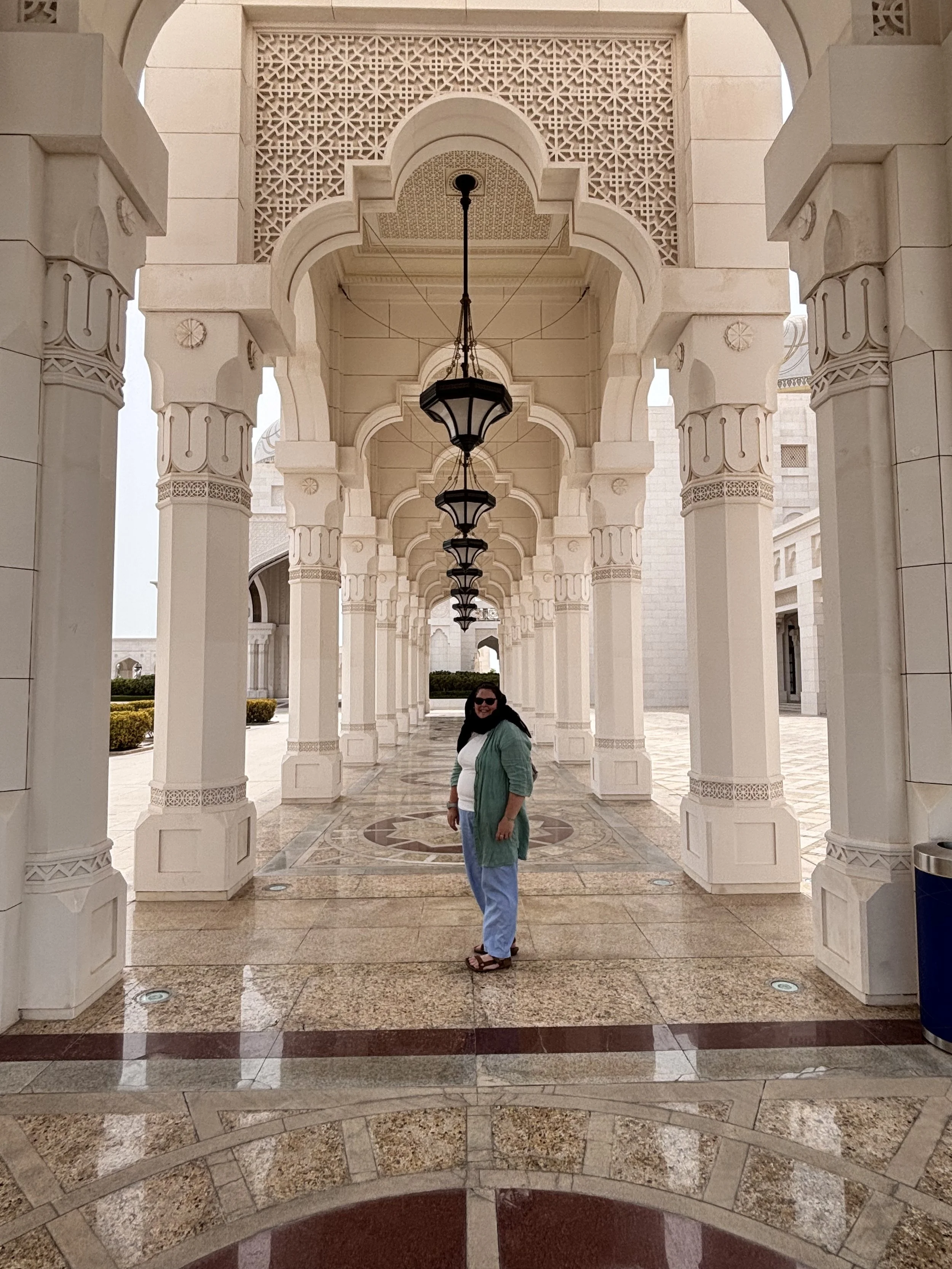
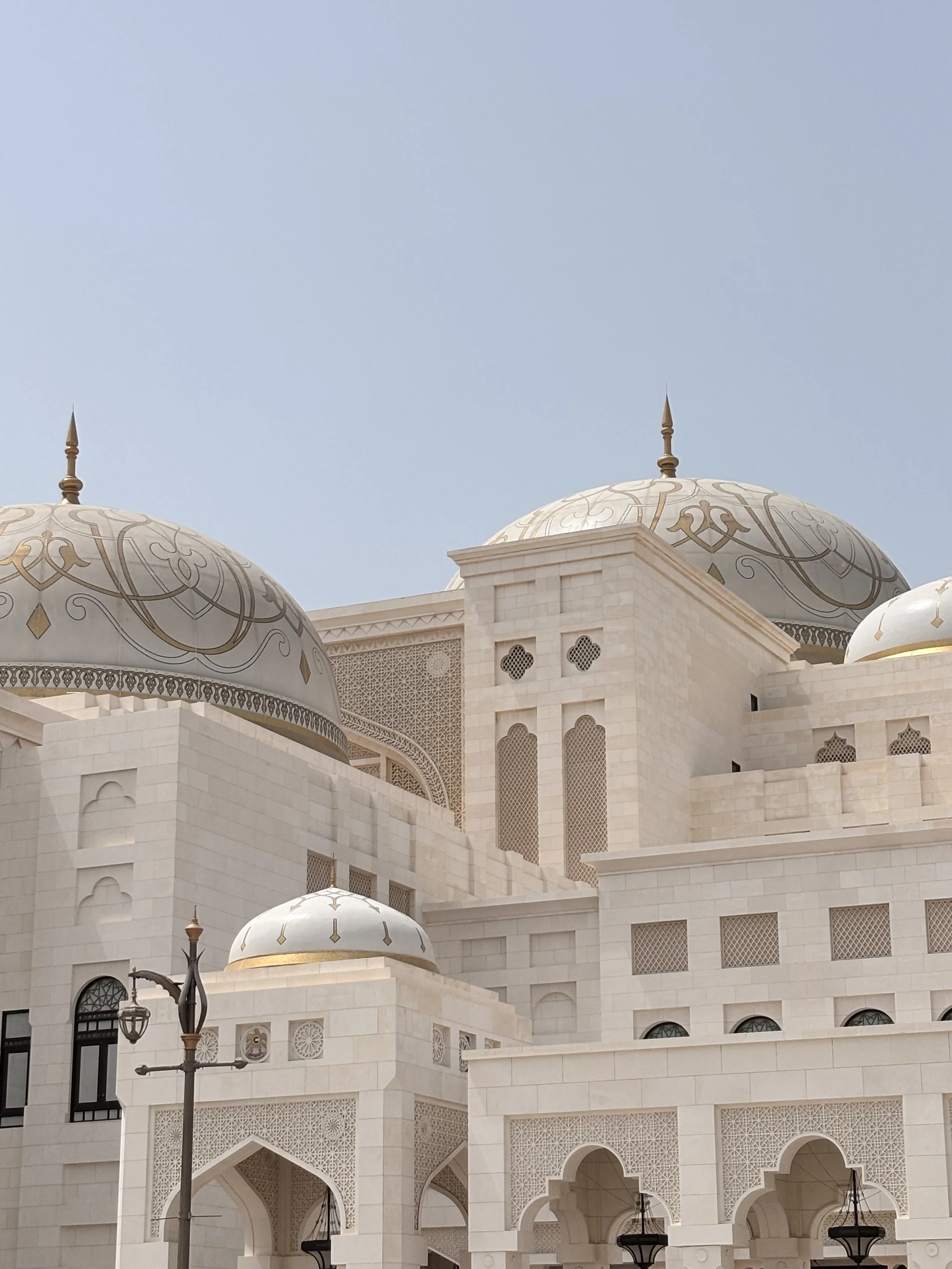
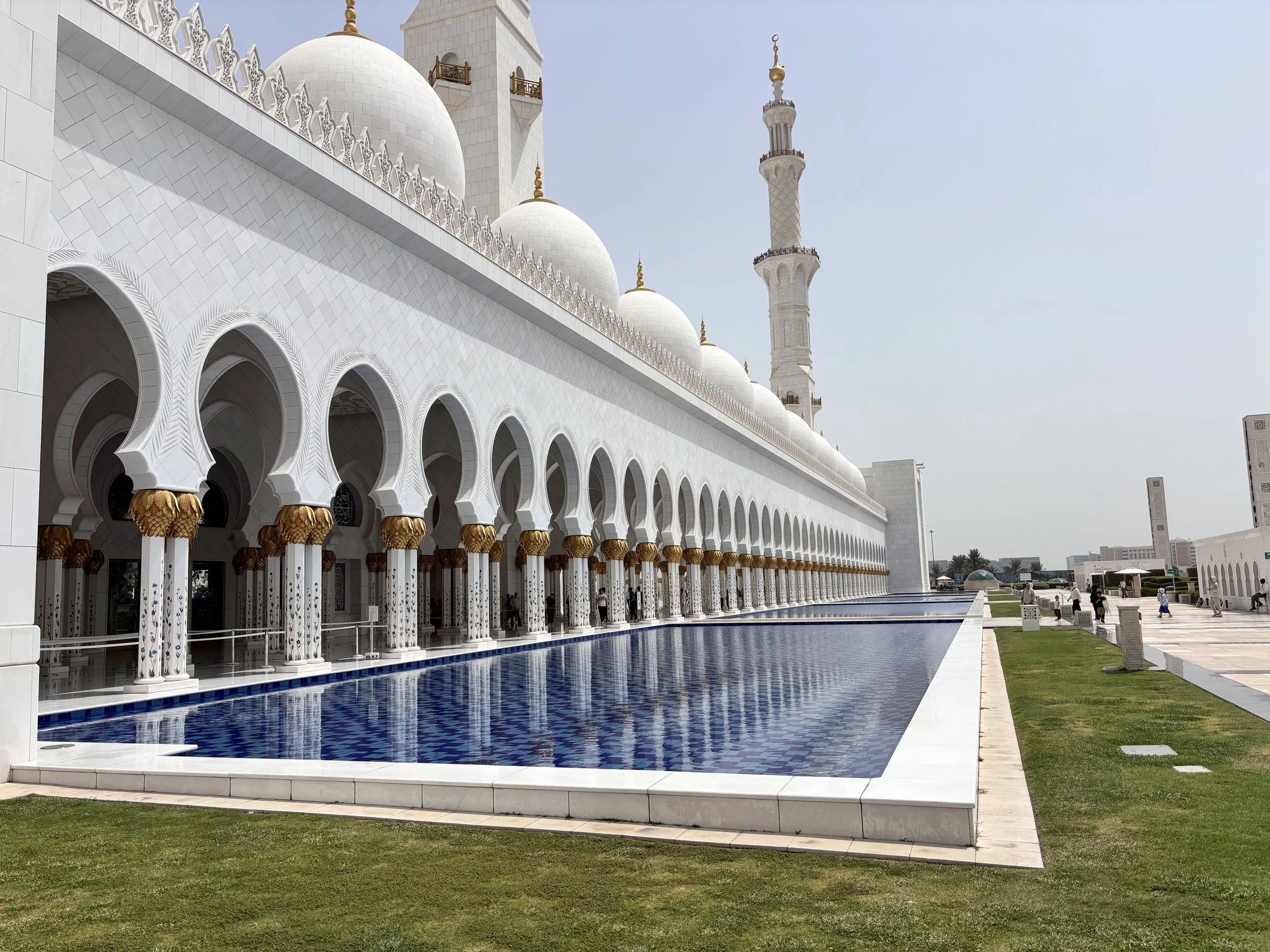
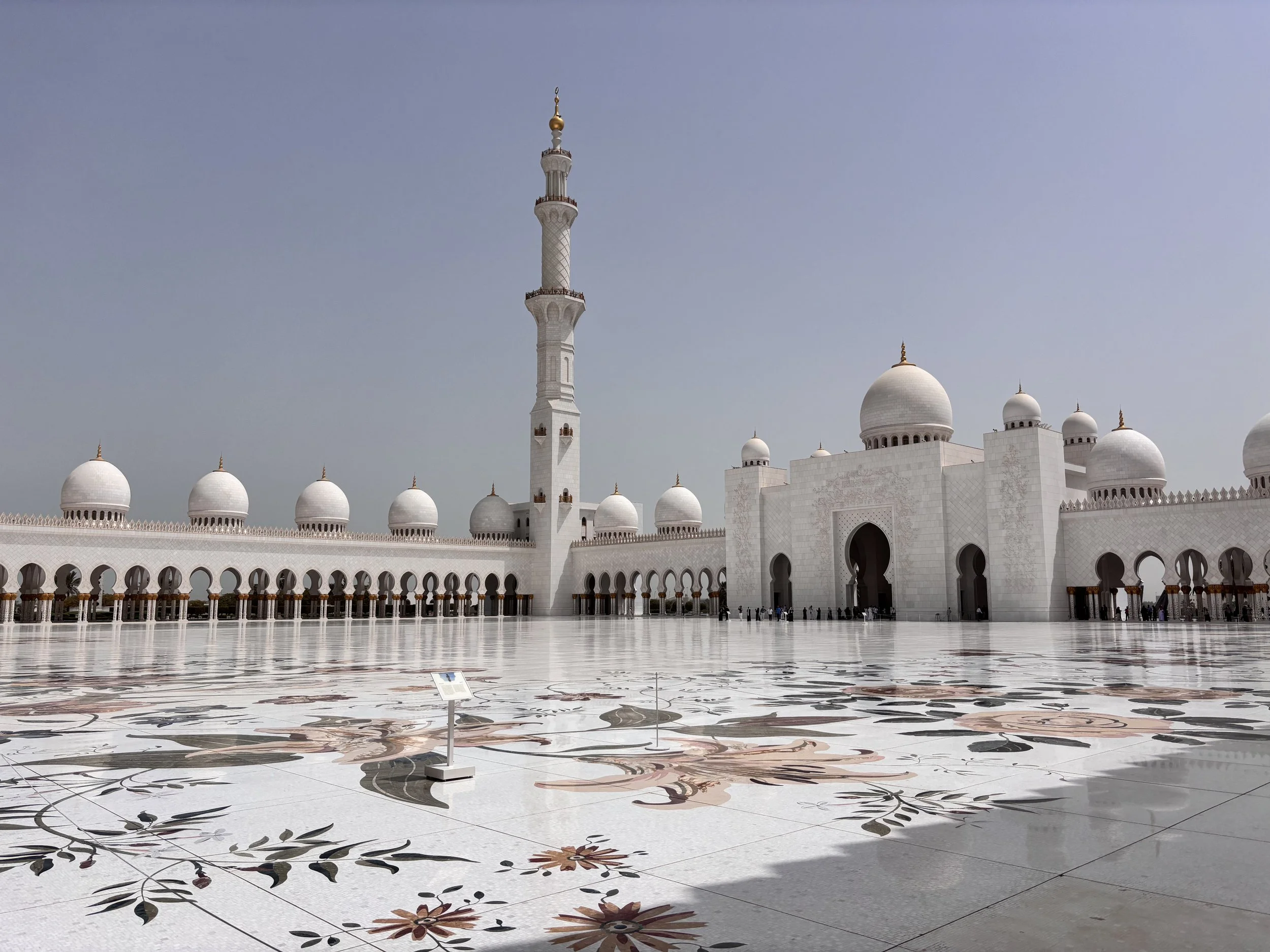
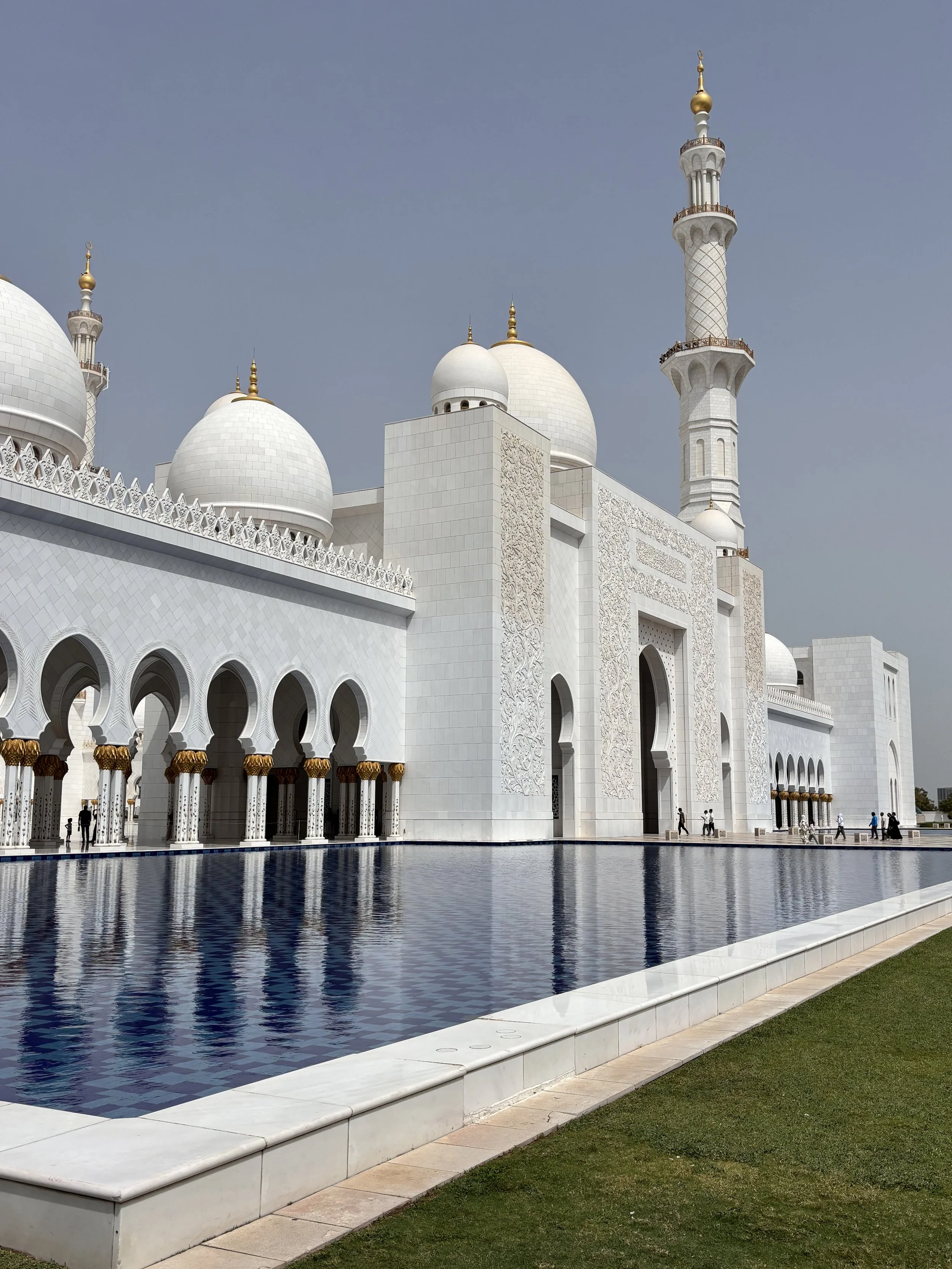
Our first stop was the magnificent Sheikh Zayed Grand Mosque. Long before we officially arrived, its gleaming white domes appeared on the horizon, rising from the desert landscape like a mirage. The drive towards the mosque alone is worth the journey. With each passing kilometer, the scale of the complex becomes more apparent until it completely dominates the skyline.
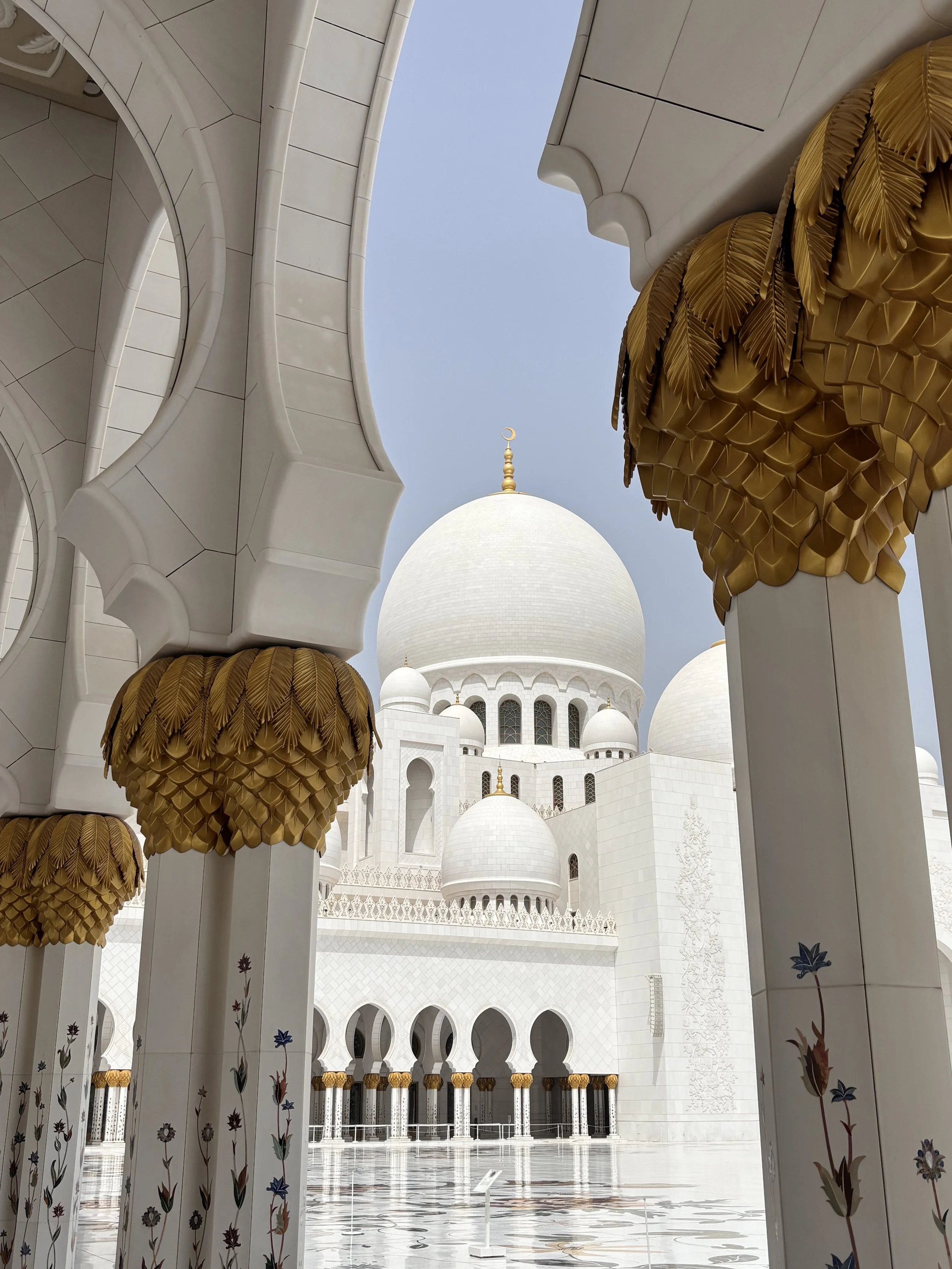
Bathed in the morning sun, the pristine white marble was almost blinding. Every surface seemed to reflect the light, creating an ethereal glow that made the mosque appear as though it had been carved from ivory rather than stone.
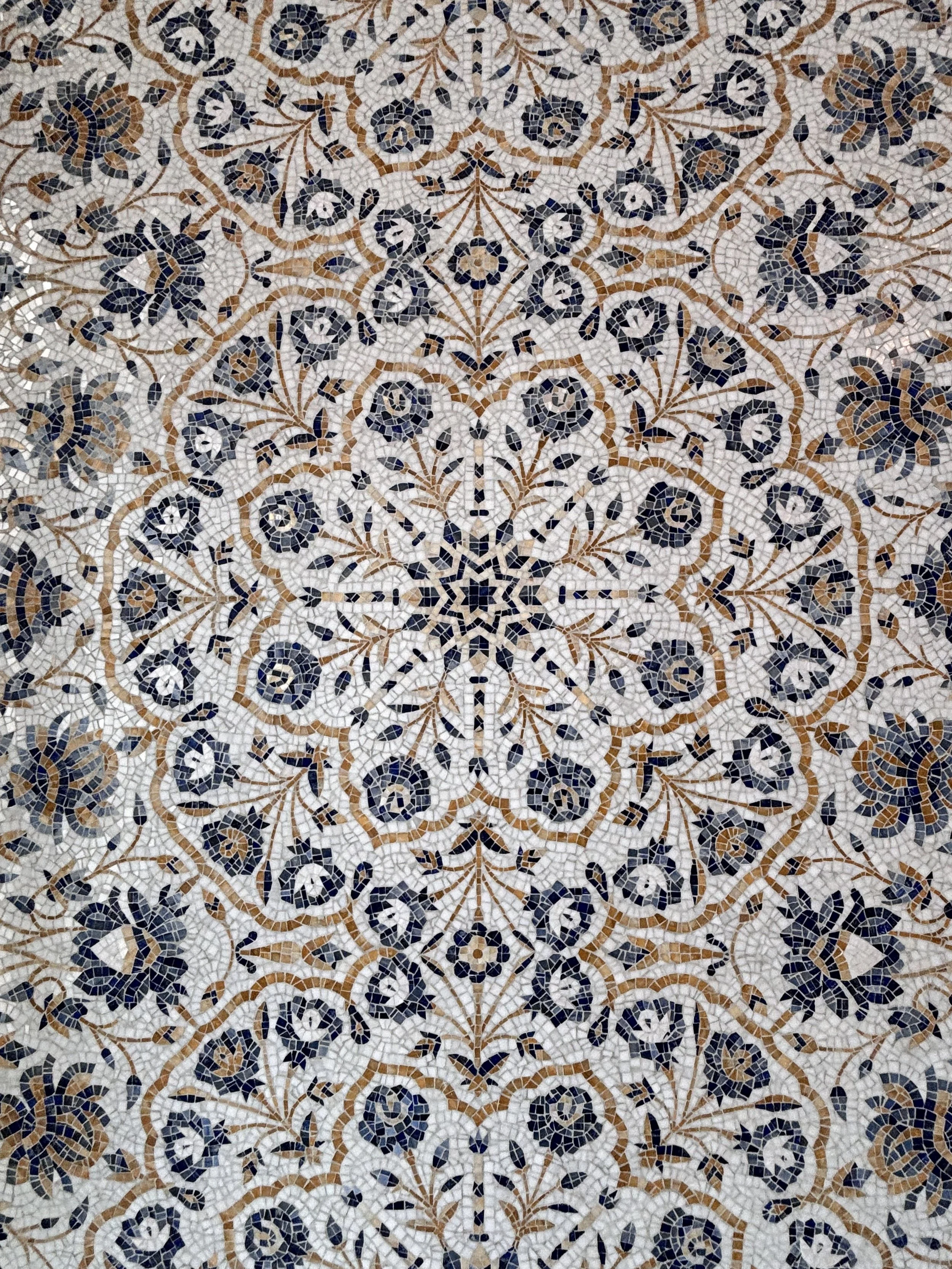
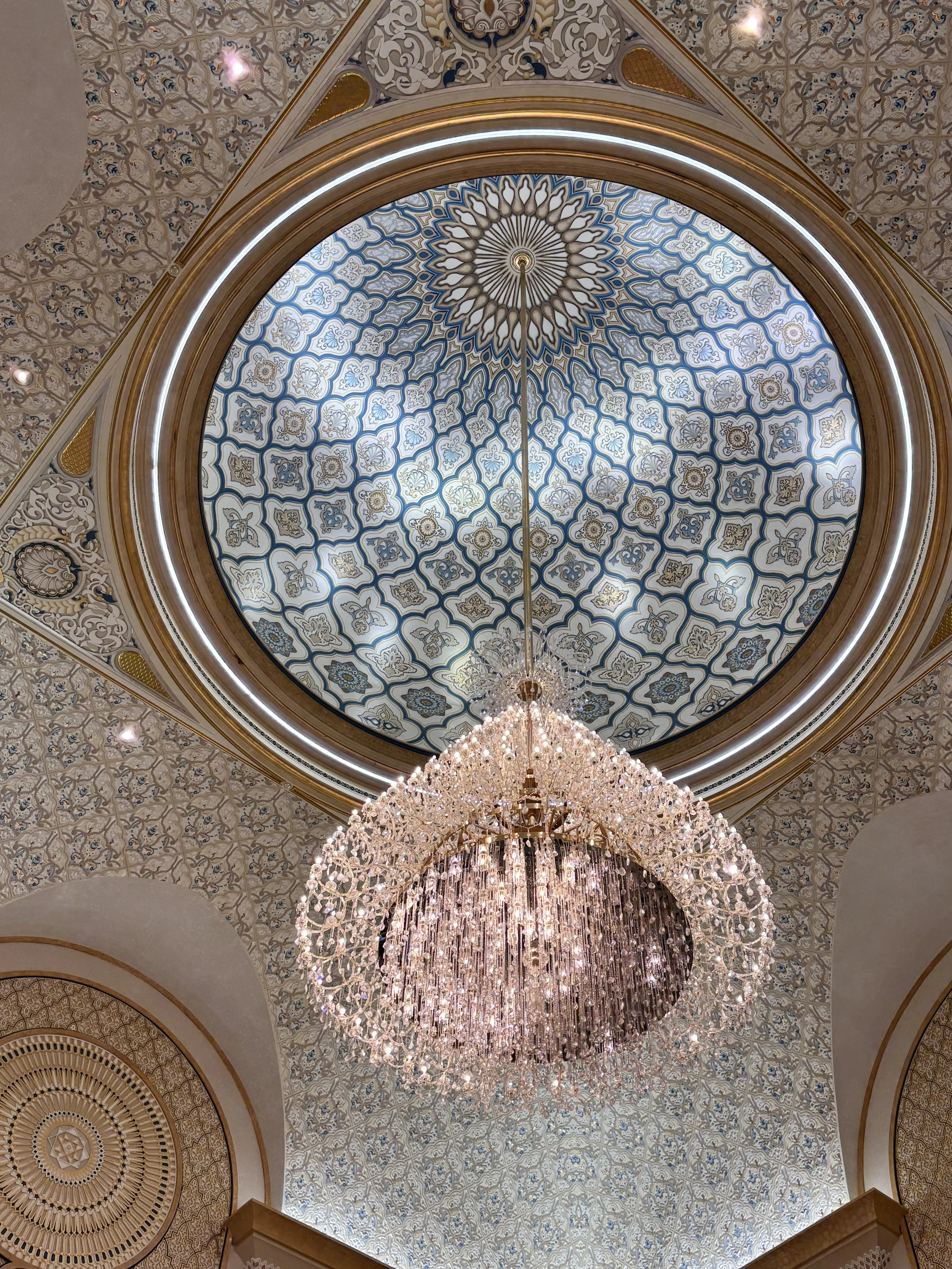
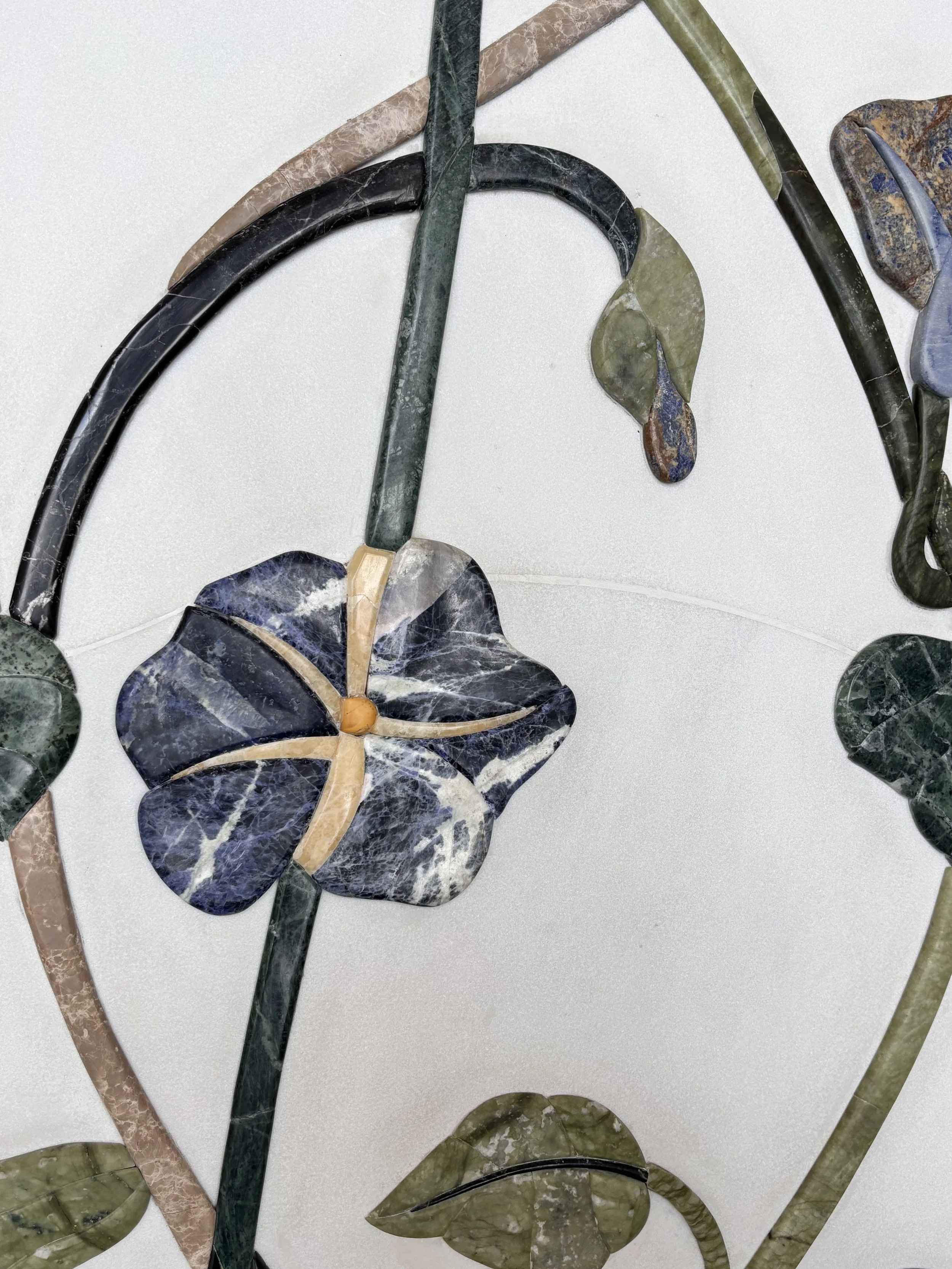
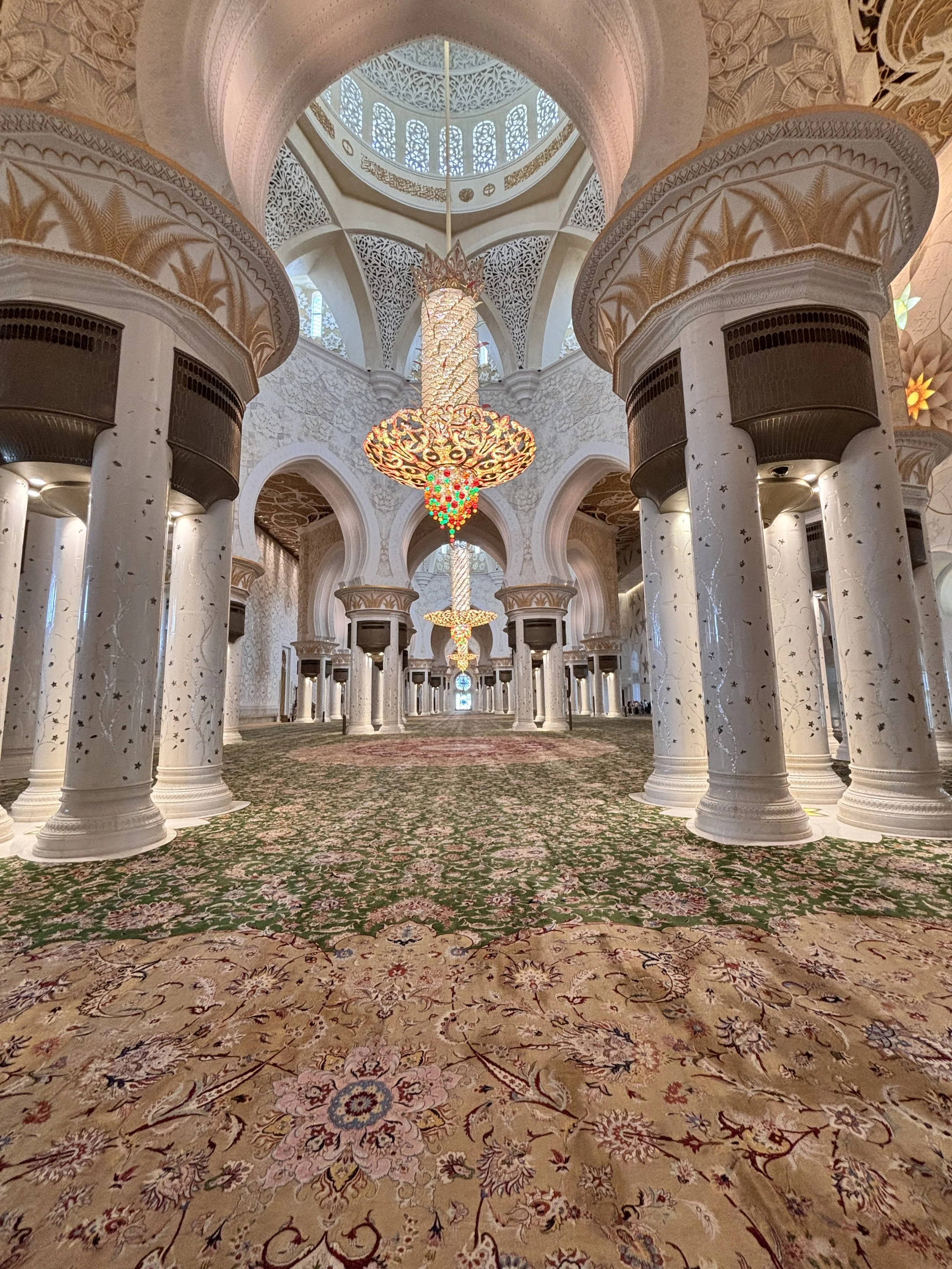
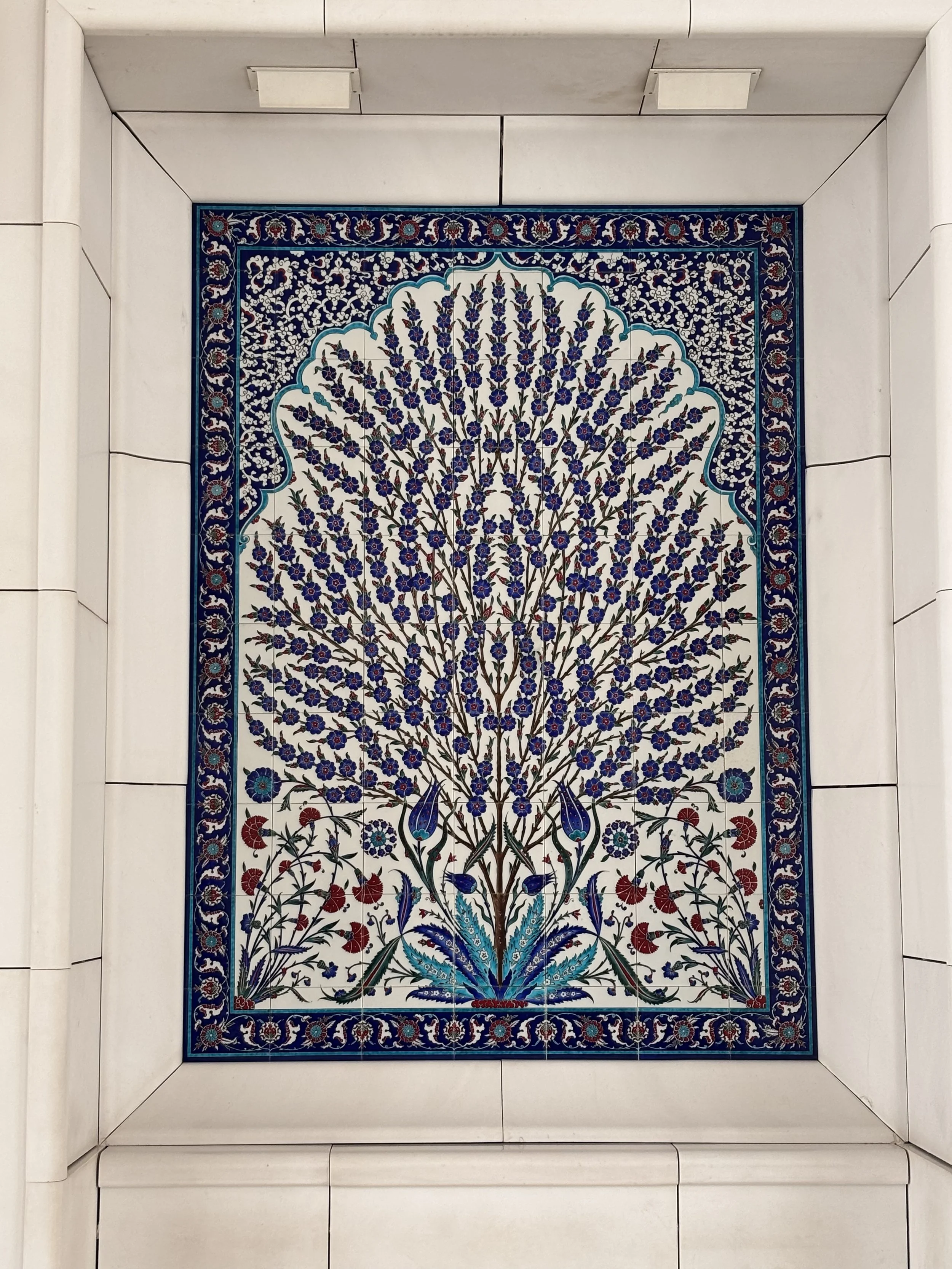
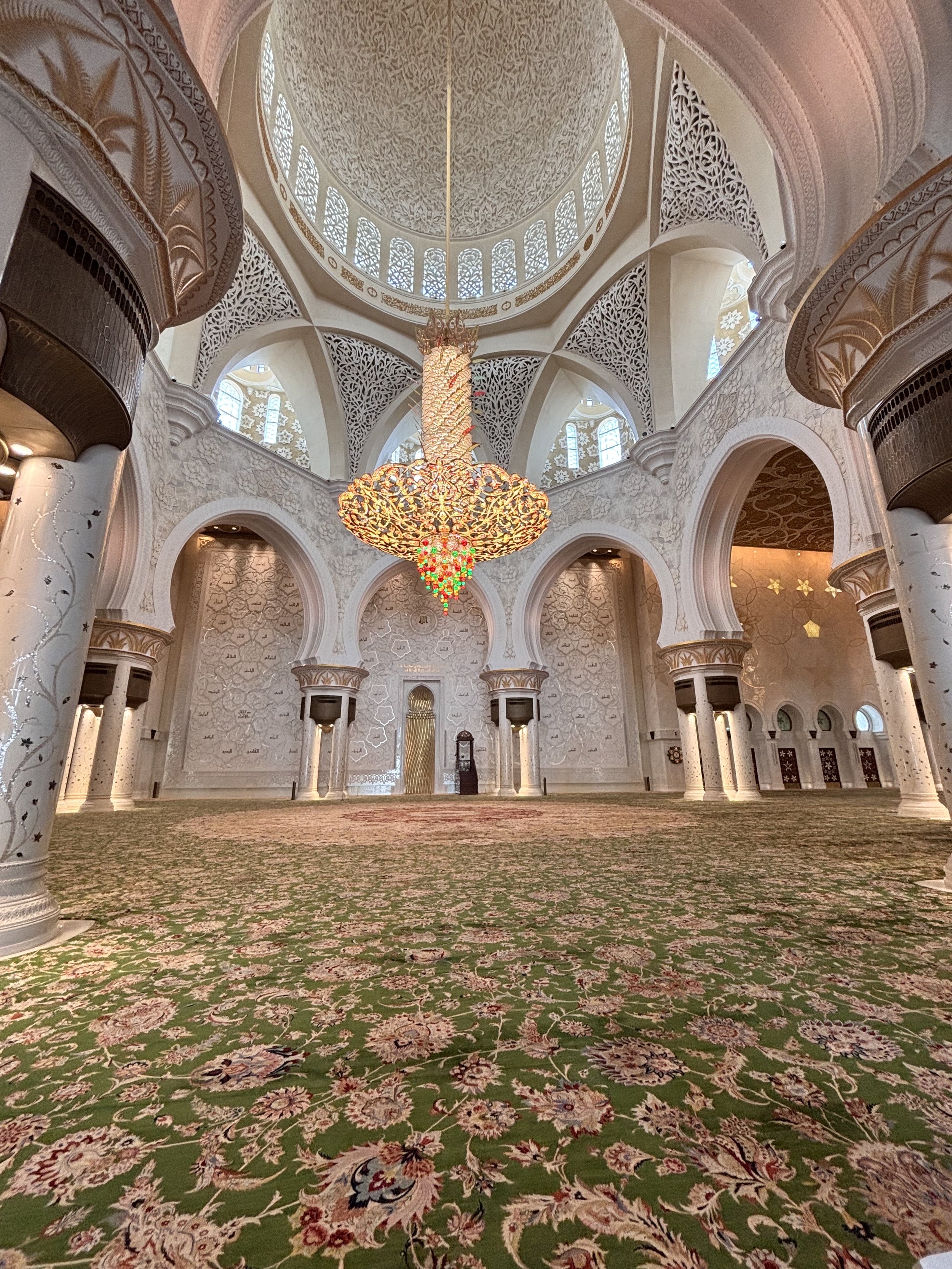
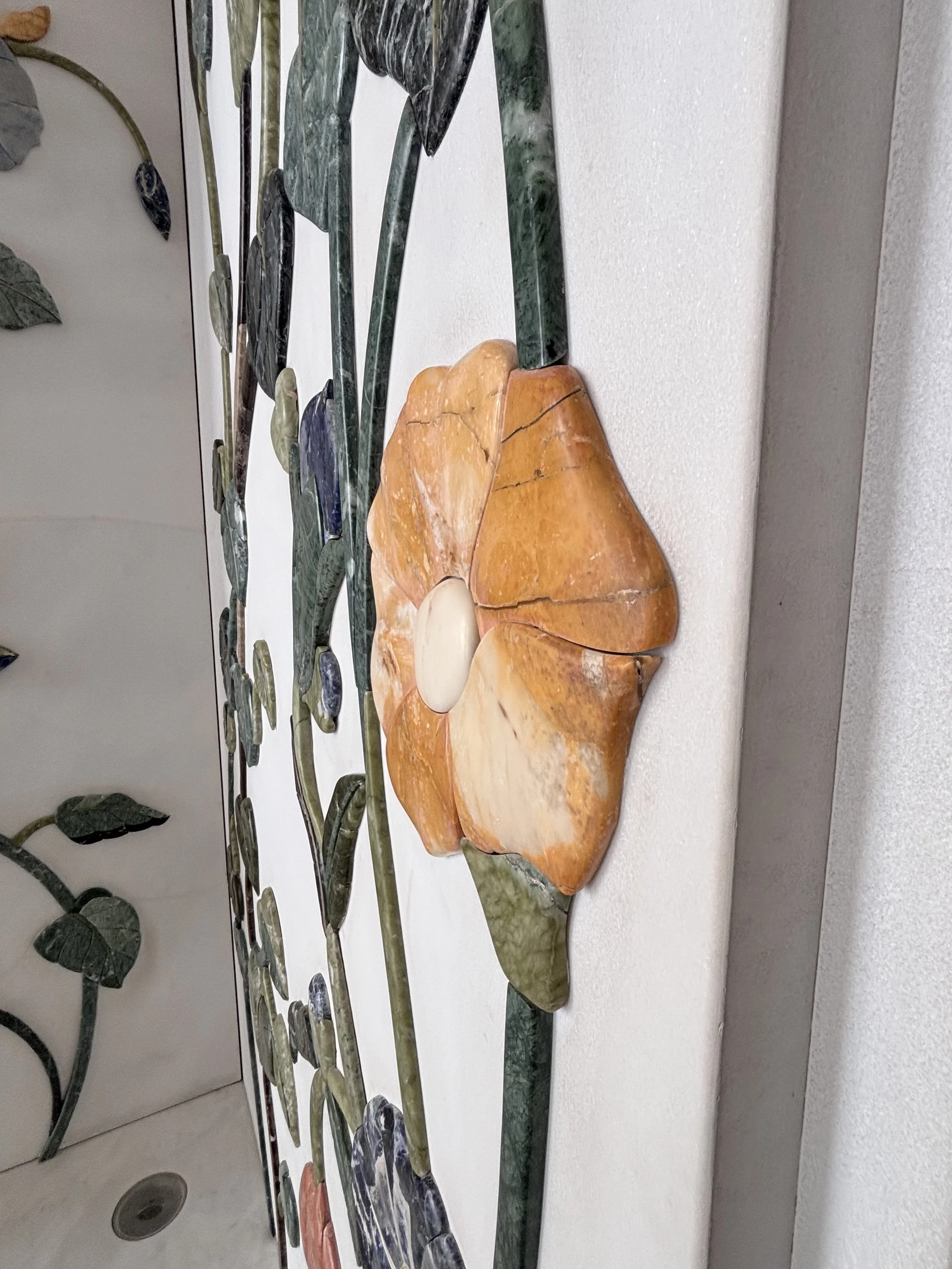
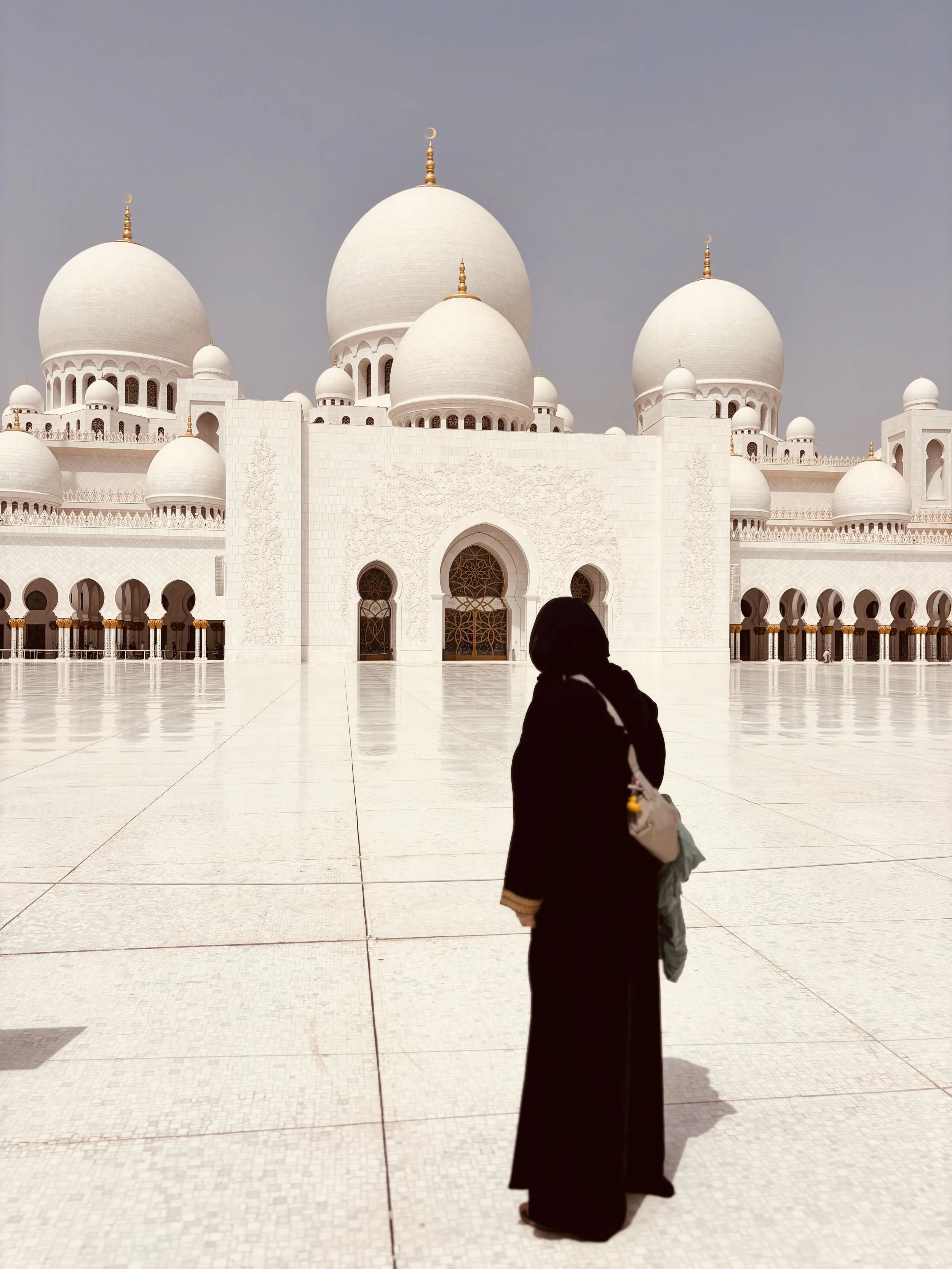
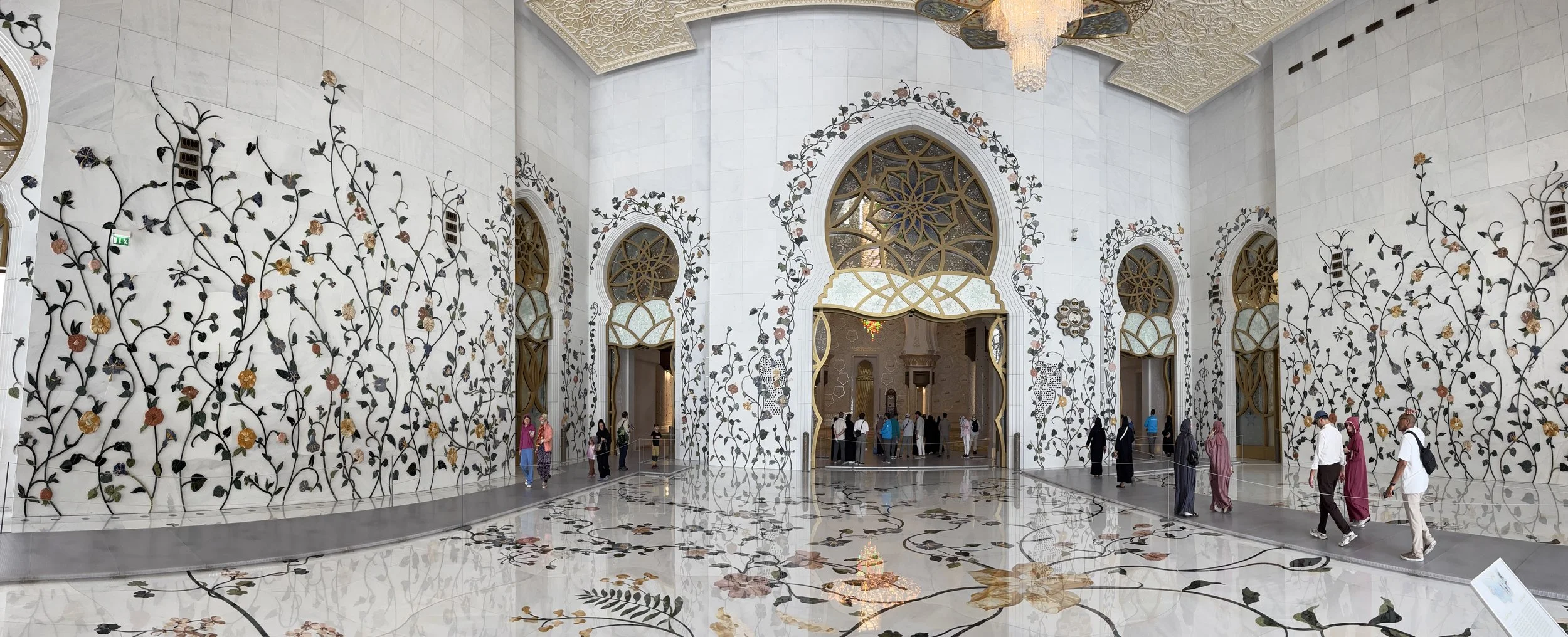
Despite wearing long pants and a three-quarter sleeve overshirt, I was still required to wear an abaya. The full-length black garment certainly wasn't designed with the Abu Dhabi heat in mind, yet it was a small concession for the opportunity to visit one of the most beautiful buildings I have ever seen. Stepping into the vast courtyard was breathtaking. Stretching across an area larger than many city squares. Under the undercover walkways the polished marble floor continues and the walls are adorned with intricate floral mosaics, their vibrant colours standing in stark contrast to the brilliant white surroundings. Inside the mosque your eye is drawn upward revealing equally extraordinary craftsmanship. Delicate marble carvings seemed to lace the ceilings, while enormous Swarovski crystal chandeliers hang above like glittering constellations. Knowing that some of the crystal components were supplied by Australia added an unexpected connection to home.
Everywhere I looked there was another detail to admire. The symmetry. The craftsmanship. The sheer scale. The mosque is capable of accommodating tens of thousands of worshippers, yet despite its size, it somehow manages to feel peaceful and intimate.
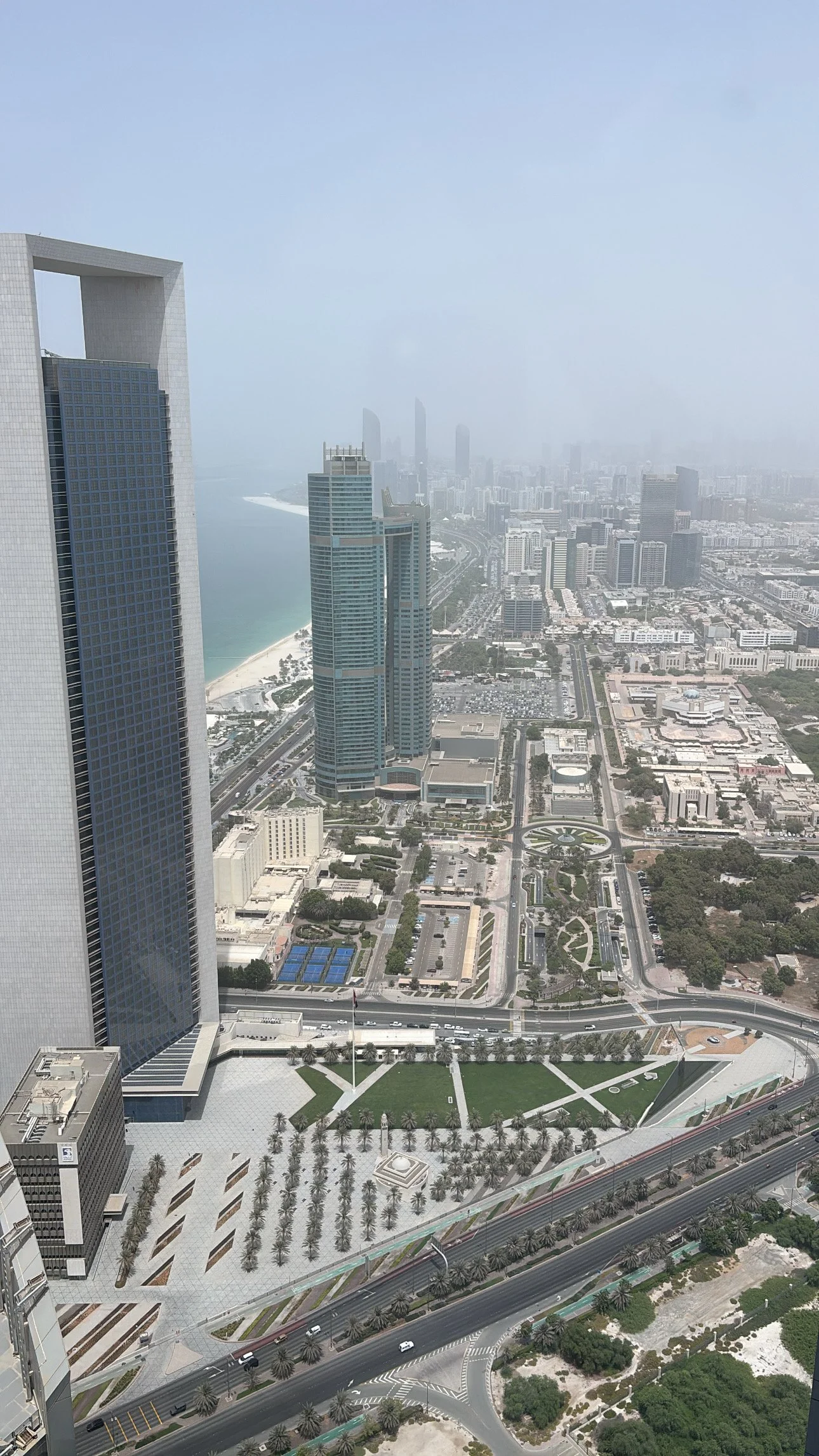
From the serenity of the mosque, we moved to a very different perspective of Abu Dhabi at Etihad Towers. A high-speed elevator whisked us to the Observation Deck at 300, where floor-to-ceiling windows offered sweeping 360-degree views across the city.
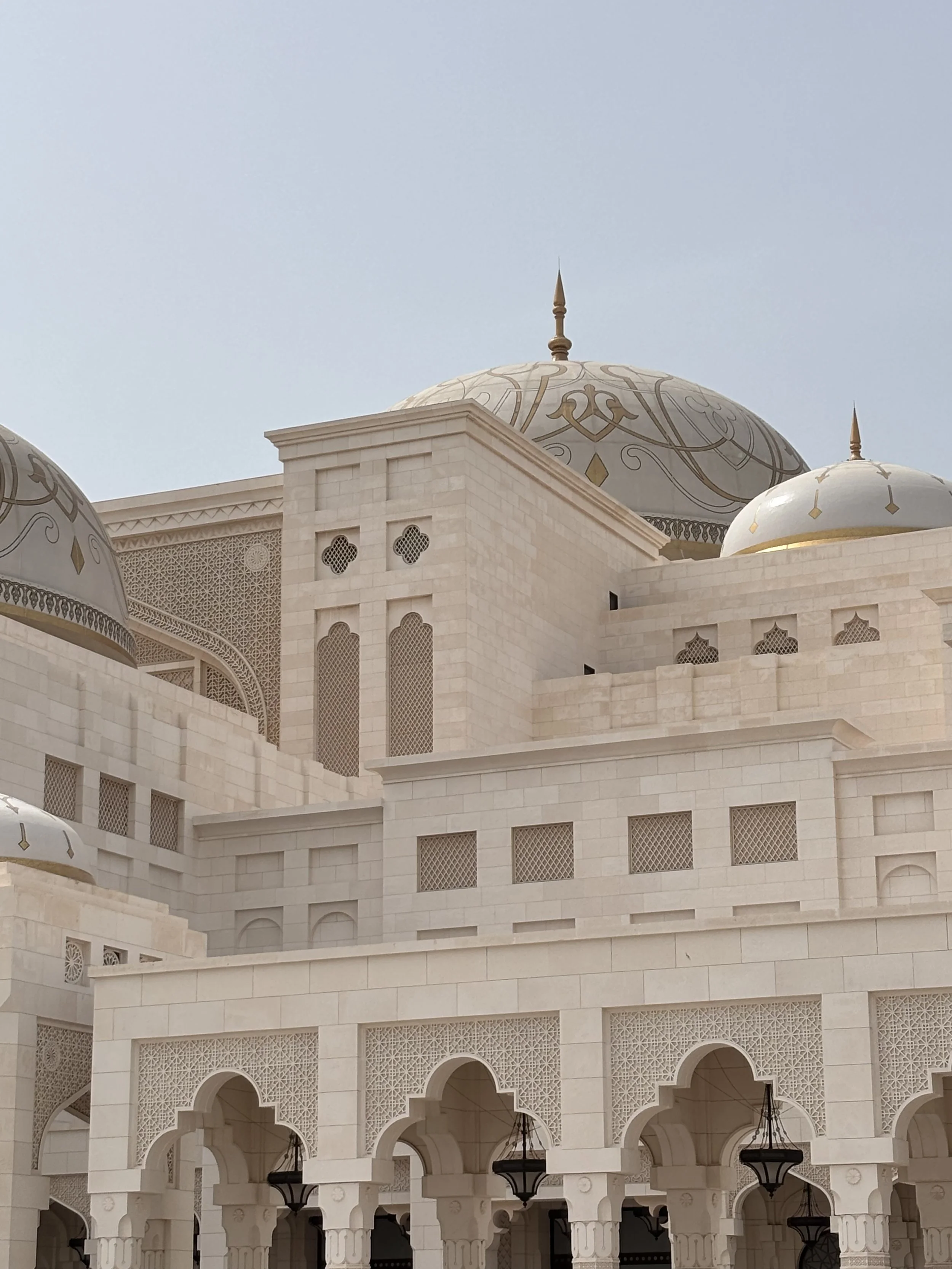
Qasr Al Watan, Abu Dhabi - “Palace of the Nation”
The familiar haze that often blankets the Gulf softened the distant skyline, but even through the mist it was clear that Abu Dhabi is a city in constant evolution. Construction cranes dotted the horizon in almost every direction. New towers rose alongside established landmarks, evidence of a city continuing to reinvent itself while maintaining its position as the political and economic heart of the United Arab Emirates.
Far below, the turquoise waters of the Arabian Gulf wrapped around the city's islands and peninsulas. Looking out across the Corniche, the pristine beaches, manicured parks and modern skyline created a striking contrast to the desert landscapes we had travelled through earlier that morning.
If the mosque inspired awe through spirituality, Qasr Al Watan inspired it through artistry.
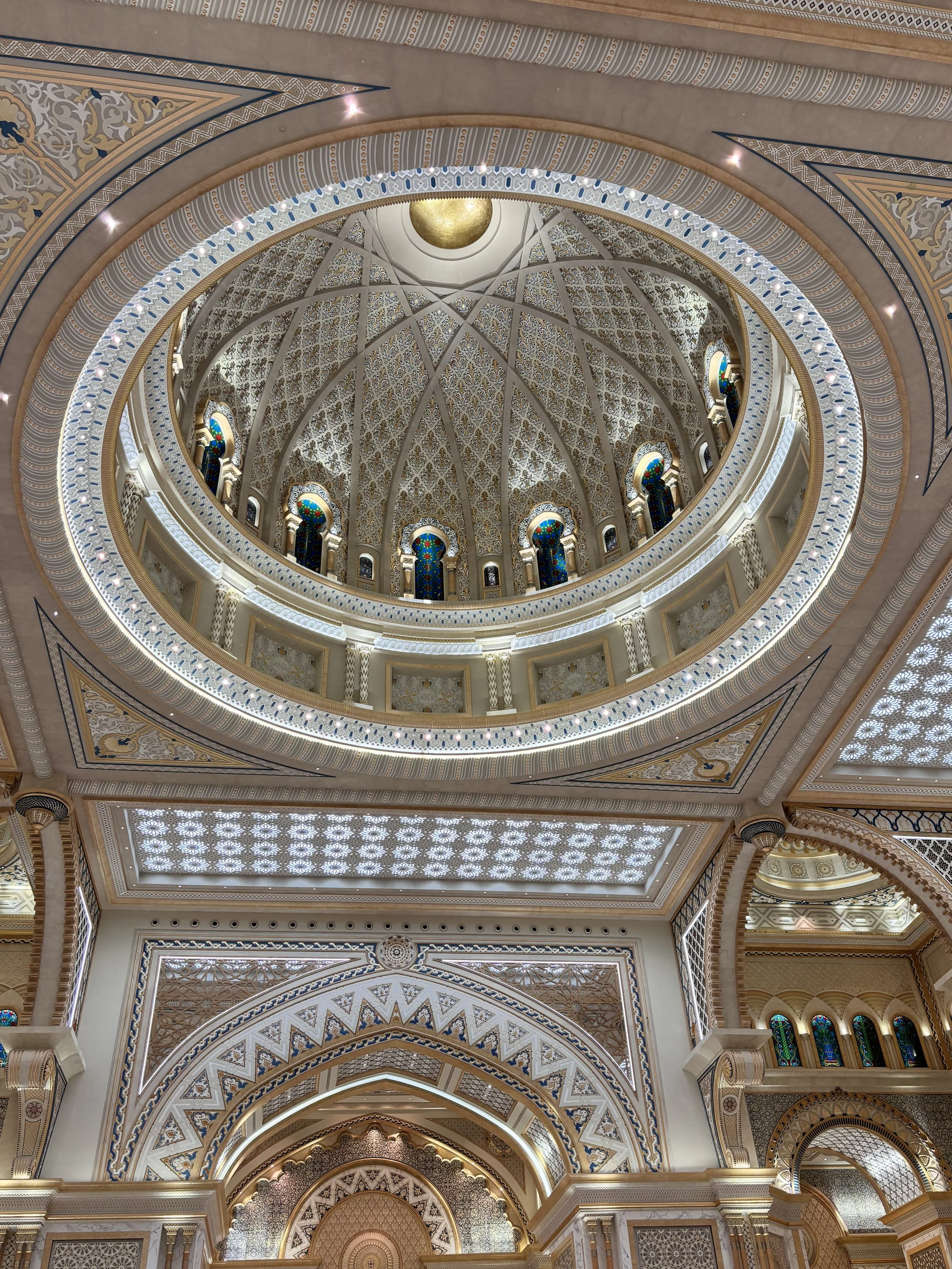
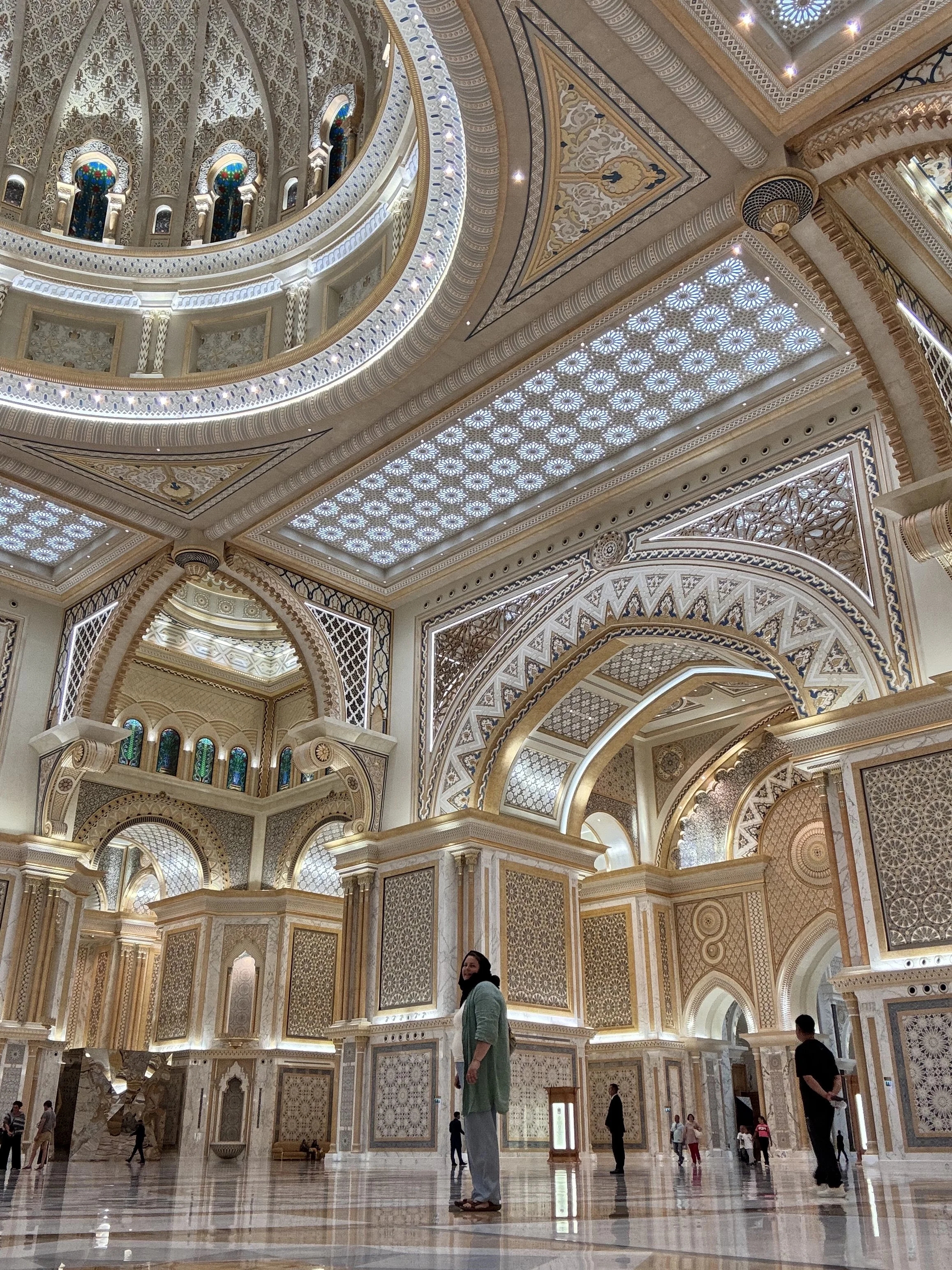
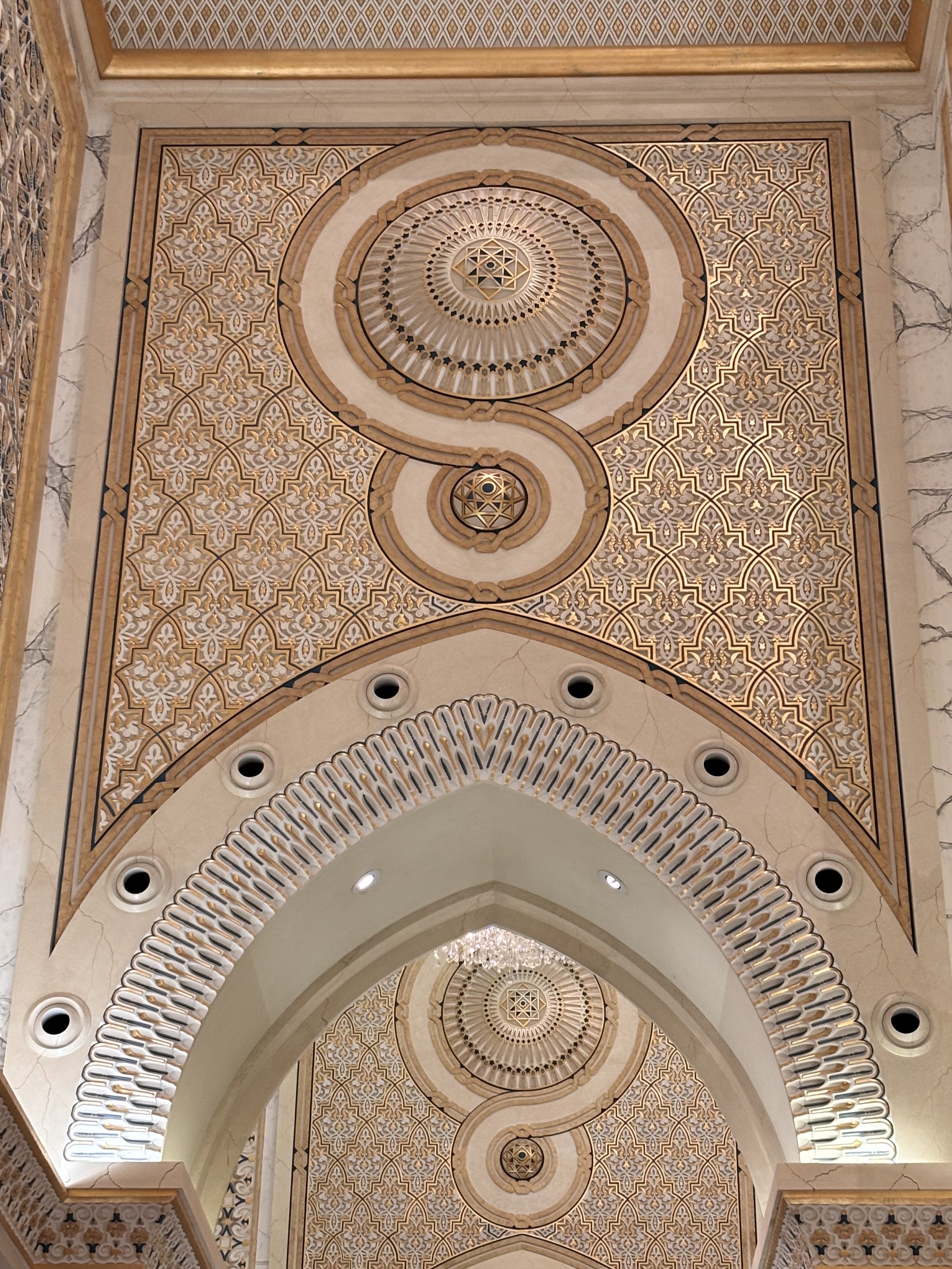
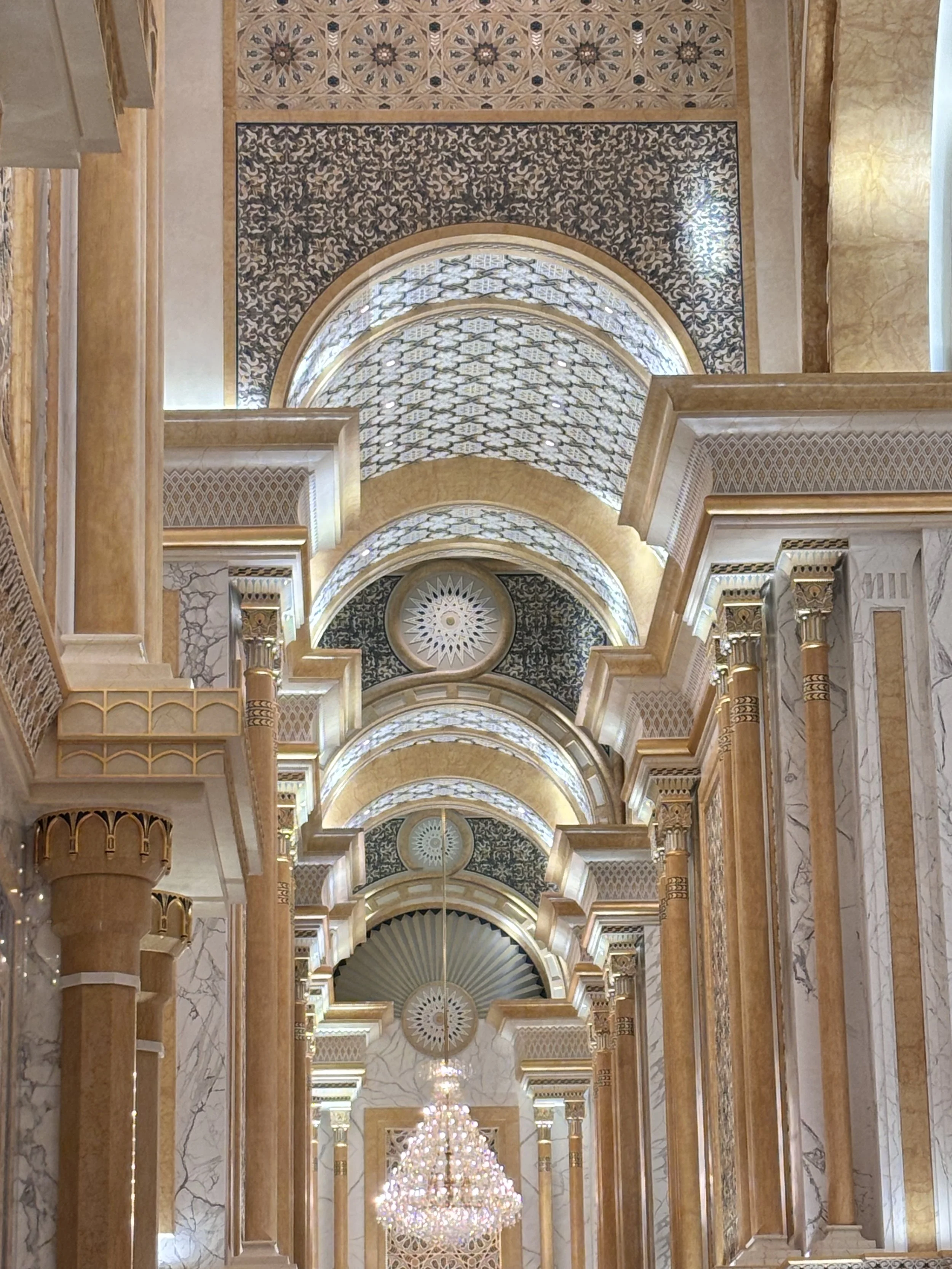
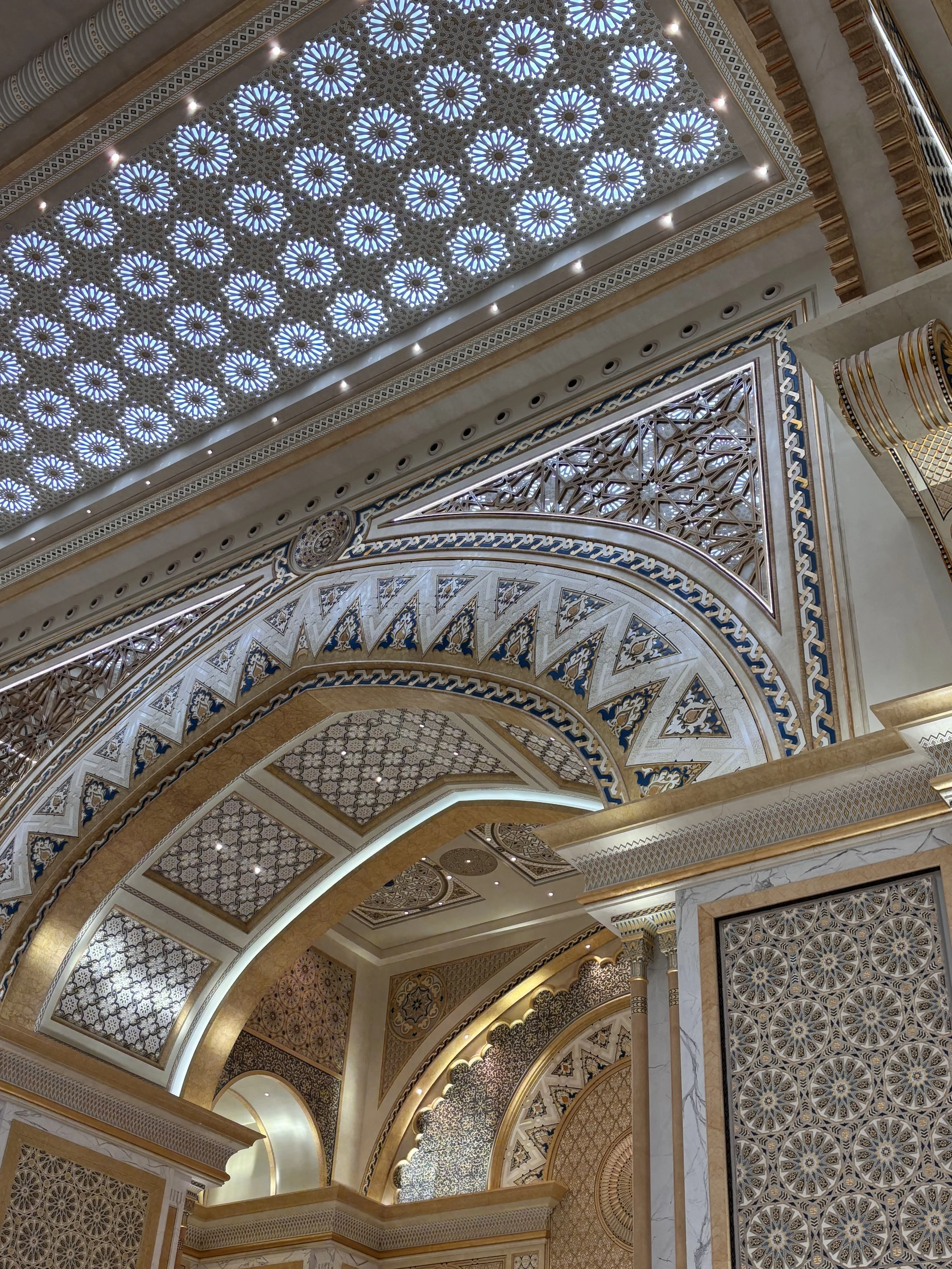
Translated as "Palace of the Nation," this working presidential palace is unlike anything I have ever visited. From the outside, its grand white façade and perfectly proportioned domes are impressive enough. Inside, however, the palace becomes almost impossible to describe.
Every surface is a masterpiece.
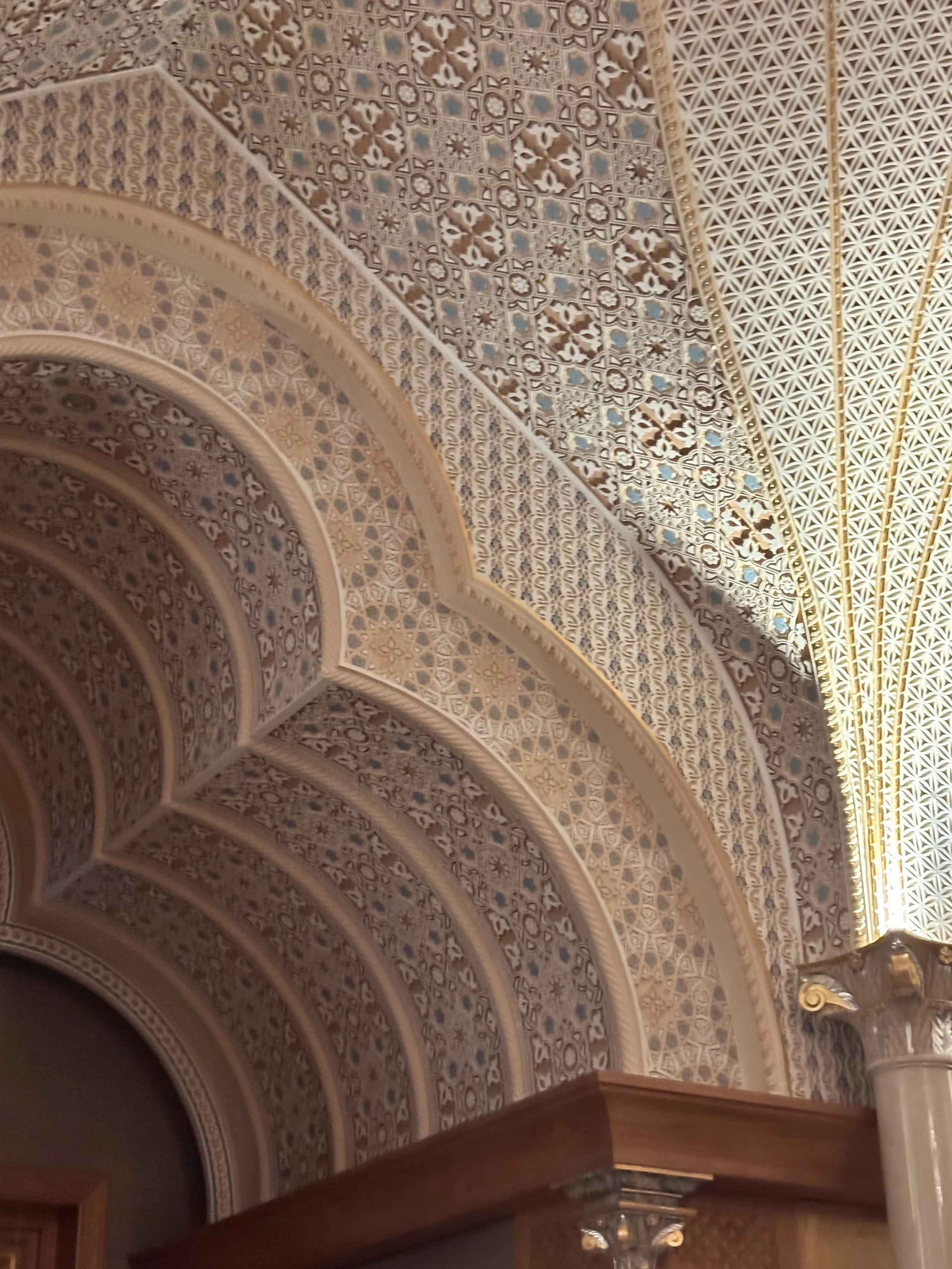
The enormous central dome rises high above visitors, its intricate geometric patterns drawing the eye upward. Sunlight filters through the structure, illuminating a dazzling collection of colours, textures and designs. The tile work alone could occupy your attention for hours. Thousands upon thousands of carefully crafted pieces come together to create mesmerising patterns that seem to stretch endlessly across walls, ceilings and floors.
Individual rooms house gifts presented to the United Arab Emirates by world leaders and visiting dignitaries. Each tells its own story of diplomacy, culture and international relationships. Yet despite the significance of the artefacts, I often found my attention wandering back to the architecture itself. Like the mosque, it is a place that photographs simply cannot do justice.
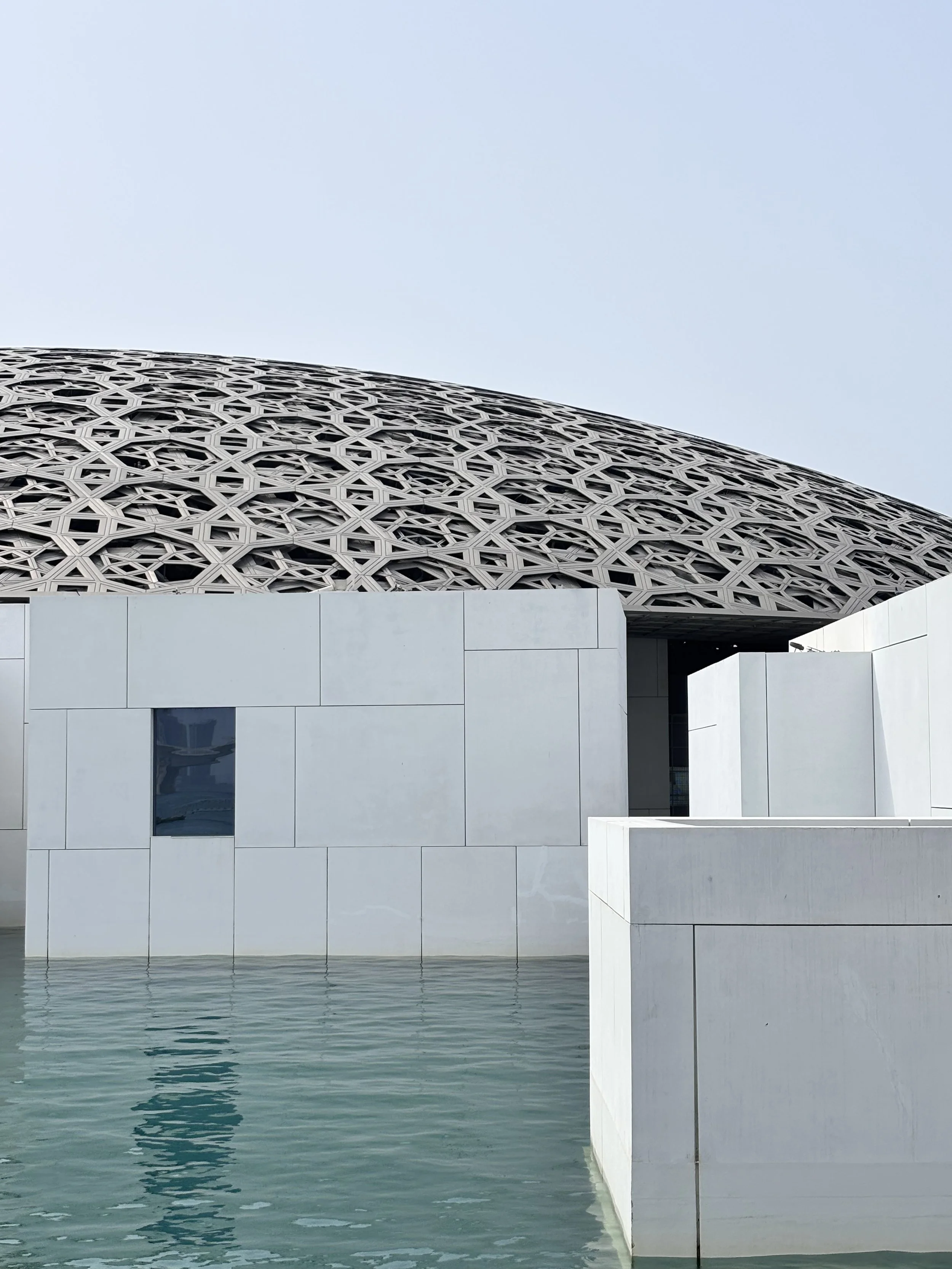
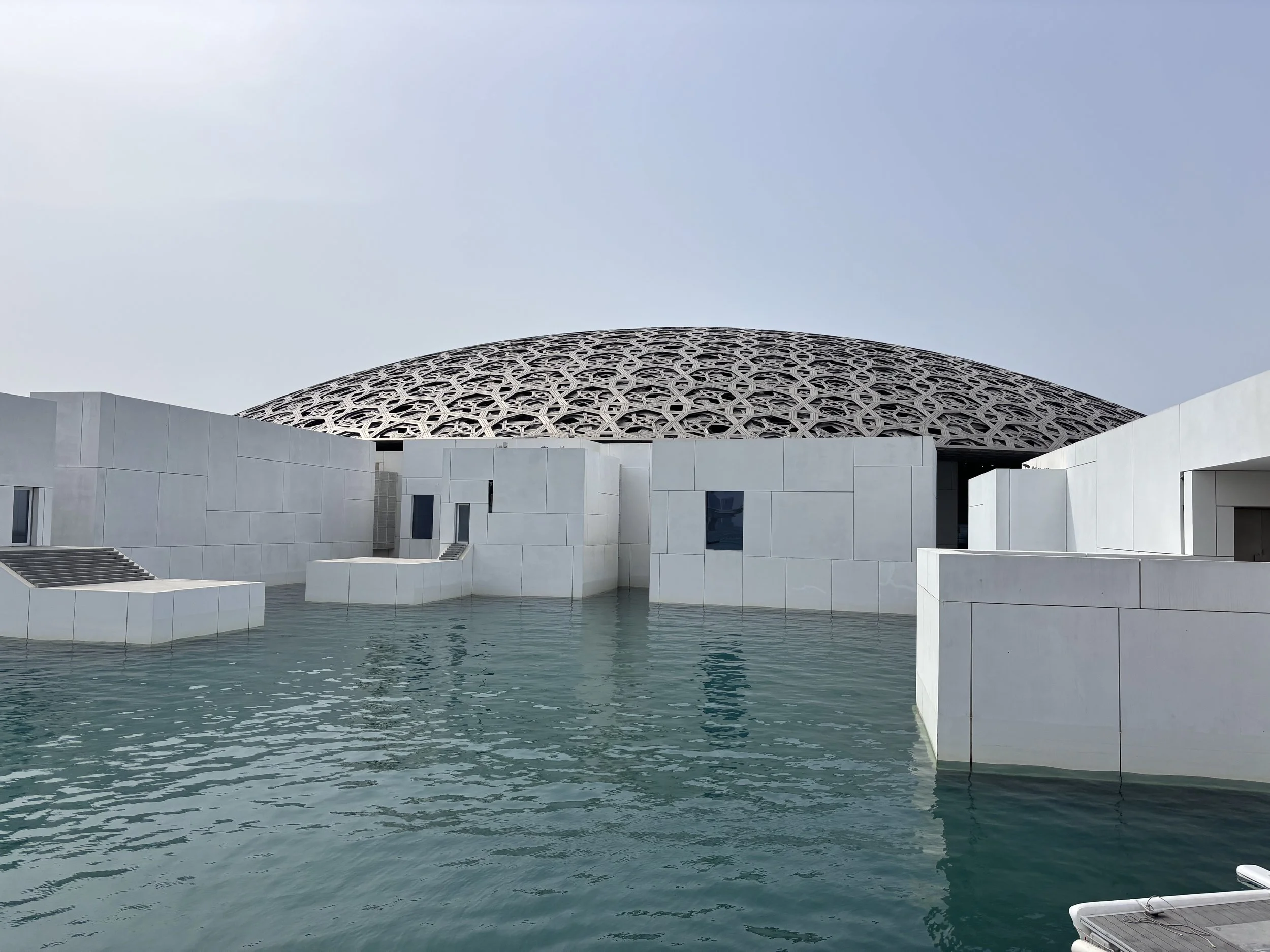
Our final stop was the Louvre Abu Dhabi. Time only allowed for a brief visit to admire the exterior, but even that was enough to leave an impression.
Seemingly floating upon the waters of Saadiyat Island, the museum's design is unlike any building I have encountered. Its enormous silver dome appears to hover effortlessly above the galleries below. Designed to mimic the filtering effect of sunlight through palm fronds, the intricate geometric structure creates what architects describe as a "rain of light."
From a distance, the museum appears futuristic. Up close, it feels almost dreamlike. Water surrounds much of the complex, reflecting the building's distinctive architecture and blurring the line between land and sea. It is a fitting gateway to one of the world's newest cultural institutions and a striking example of how Abu Dhabi continues to blend innovation with artistic expression.
As we made our way back towards Dubai later that afternoon, I found myself struggling to process everything we had seen. Each destination had been completely different, yet all shared one common trait: an extraordinary commitment to beauty, craftsmanship and ambition.
The Sheikh Zayed Grand Mosque, Etihad Towers, Qasr Al Watan and the Louvre Abu Dhabi each left me speechless in their own way.
Before visiting, I expected grandeur. What I hadn't anticipated was the emotion these places would evoke. The scale, the artistry and the attention to detail were unlike anything I had experienced before.
Simply put, the beauty of Abu Dhabi is phenomenal.

Discovering Your Own Abu Dhabi
Abu Dhabi surprised me.
Before arriving, I expected grandeur. Record-breaking buildings. Palaces. Mosques. A city built on extraordinary wealth. What I didn't expect was the beauty. Not just the beauty of the architecture, but the care with which everything has been designed. Every mosaic tile, every landscaped boulevard, every marble archway seems to have been considered.
If you're planning your own visit, here are a few things I'd suggest.
Choose Your Season Carefully
Like much of the Gulf, Abu Dhabi can be unforgivingly hot. I visited during the cooler months and still found myself seeking shade whenever possible.
For me, the ideal time to visit is between November and March, when temperatures are far more comfortable for exploring. You'll spend more time looking up at the architecture and less time wondering where the nearest air-conditioned building might be.
Dress for Respect, Not Just Comfort
Even if you're not planning to visit religious sites, modest clothing will help you feel comfortable in most settings.
If the Sheikh Zayed Grand Mosque is on your itinerary—and it absolutely should be—be prepared for strict dress requirements. Despite wearing long pants and a three-quarter sleeve overshirt, I was still required to wear an abaya before entering. It wasn't exactly designed for an Australian accustomed to breathable natural fibres, but it was a reminder that travel sometimes means adapting to local customs.
The reward is access to one of the most beautiful buildings in the world.
Stay Long Enough to Slow Down
Many visitors see Abu Dhabi as a day trip from Dubai. That's exactly how I experienced it, and it was wonderful.
But if I were to return, I would stay a night or two.
Abu Dhabi feels calmer than Dubai. Less hurried. More spacious. There is something appealing about the wide boulevards, waterfront promenades and slower pace. It's a city that invites you to linger rather than rush.
Getting Around is Easier Than You Think
The distances between attractions are greater than they first appear, and the city has been designed with cars in mind.
For a short visit, organised tours or taxis make exploring remarkably easy. Our small-group tour allowed us to simply enjoy the experience without worrying about navigation, parking or logistics. Sometimes that's the best gift you can give yourself while travelling.
If your keen to do the same tour we did - Dubai to Abu Dhabi: Grand Mosque, Royal Palace & Etihad Tower - Click here
Don't Miss the Places That Leave You Looking Up
The Sheikh Zayed Grand Mosque was undoubtedly the highlight of my day. Photographs simply don't prepare you for the scale, the craftsmanship or the way the white marble glows beneath the sun.
Qasr Al Watan was another surprise. I expected an impressive palace. I didn't expect to spend so much time staring at ceilings, trying to comprehend the intricate patterns and artistry surrounding me.
And while the views from Etihad Towers were softened by the ever-present haze, standing 300 metres above the city provided a fascinating perspective on Abu Dhabi's constant growth and evolution.
If time allows, don't overlook the Louvre Abu Dhabi. Even a brief visit to admire the architecture is worthwhile. The building appears to float between sea and sky, and its remarkable dome is a masterpiece in its own right.
Safety: One of the Easiest Places I've Travelled
As a traveller, particularly as someone who often travels independently, feeling safe matters.
Abu Dhabi felt exceptionally safe throughout my visit. The city is clean, orderly and welcoming. Common travel awareness still applies, of course, but I never once felt uncomfortable while exploring.
Instead, I found myself free to focus on the experience itself.
Look Beyond the Landmarks
The mosque, palace and observation deck are extraordinary, but one of my strongest memories is actually the journey between Dubai and Abu Dhabi.
Watching the skyscrapers gradually give way to desert. Seeing endless dunes stretching towards the horizon. Realising how quickly this region has transformed from small coastal settlements into some of the world's most ambitious cities.
Sometimes the moments between the attractions tell the most interesting stories.
Leave Room to Be Surprised
If there's one thing Abu Dhabi taught me, it's to arrive with expectations but leave space for wonder.
The photographs online are impressive. The guidebooks are full of superlatives. Yet standing beneath the soaring domes of the mosque or gazing across the city from Etihad Towers felt entirely different to anything I had imagined.
Abu Dhabi isn't simply a collection of landmarks.
It's a place that reminds you that beauty, craftsmanship and ambition can exist on a scale that almost defies belief.
And perhaps that's the real joy of discovering your own Abu Dhabi.
Ensure that you stay connected while travelling with Simify’s eSims - Find out more now
This page contains affiliate links, meaning we may earn a commission at no extra cost to you - thank you for supporting our work!
